
Casinos Accepting Google Pay in Australia: The Offshore Operator Map for 2026
 Available in AU

Australian players have no locally licensed online casinos to choose from. The Interactive Gambling Act shut that door in 2001 and it remains closed. What exists instead is a grey-market ecosystem of offshore operators licensed elsewhere—predominantly Curacao—that accept Australian deposits and run no promotional campaigns on Australian soil to stay off the regulator’s radar. Google Pay works at many of these operators, but not all of them handle the integration properly, and withdrawal support is non-existent across the board.
This guide maps which offshore casinos actually process Google Pay deposits for Australian players in 2026, what deposit and withdrawal conditions you face at each, and what the legal and practical realities are when your bank might block the transaction midstream. The operators below are ranked by deposit convenience, withdrawal speed, and game library depth. Every casino listed operates under a Curacao gaming licence. None hold Australian regulatory approval because no such approval exists for online casinos.
Top Offshore Casinos Accepting Google Pay in Australia 2026
The table below aggregates the eight offshore operators with confirmed Google Pay integration for Australian players. Minimum deposits range from $10 to $25. Withdrawal processing spans 24 hours to five days depending on the operator’s internal workflows and your chosen payout method. The “distinguishing feature” column highlights what separates each operator from the pack beyond raw game counts.
| Operator | Licence | Minimum Deposit | Withdrawal Speed | Distinguishing Feature |
|---|---|---|---|---|
| RocketPlay | Curacao | $10 | 24 hours | Highest withdrawal caps ($5,000 daily, $50,000 monthly), exclusive Hacksaw Gaming titles |
| Rocket Casino | Curacao | $20 | 1–3 days | 15% weekly cashback with zero wagering, PayID instant withdrawals |
| National Casino | Curacao | $15 | 1–2 days | Highest monthly withdrawal cap ($40,000), 3,000+ games from 50+ providers |
| WinSpirit | Curacao | $15 | 2–4 days | Highest max deposit per transaction ($6,000), Wednesday no-wagering bonus |
| Ignition Casino | Curacao | $20 | 1–2 days | Longest Australian track record (since 2016), integrated poker room |
| FairGo | Curacao | $25 | 2–5 days | Explicit Australian market targeting (.au domain), lowest withdrawal caps ($10,000/month) |
| Ozwin Casino | Curacao | $20 | 3–5 days | RealTime Gaming library (legacy provider niche) |
| WS Casino | Curacao | $10–$20 | 2–4 days | Standard offshore offering, Evolution live dealer |
RocketPlay Casino
RocketPlay operates under Dama N.V., a Curacao-registered entity running multiple casino brands across international markets. The casino launched in the mid-2020s and has built a reputation around withdrawal speed rather than promotional noise. The Curacao Gaming Control Board licence is active and verifiable via the operator’s footer validator link. Australian players face no geographic restrictions.
The game library sits at just over 1,000 titles but includes exclusive Hacksaw Gaming slots not available at competing offshore operators. Pragmatic Play and Relax Gaming round out the core providers. The $10 minimum deposit is the lowest in this peer group, positioning RocketPlay toward casual players and bankroll testers. Maximum deposit per transaction caps at $3,000. The standout feature is withdrawal speed: bank transfers complete within 24 hours, and cryptocurrency payouts land in minutes once blockchain confirmation clears. Daily withdrawal caps hit $5,000—the highest among these operators—and monthly caps reach $50,000. High rollers extracting winnings in volume will hit fewer bottlenecks here than at FairGo or Ozwin. The integrated sportsbook shares a single wallet with the casino, so Australian players can bounce between pokies and sports betting without re-depositing. Weekly tournaments regularly post prize pools above $50,000.
Rocket Casino
Rocket Casino launched in 2022 under Play Logia N.V., another Curacao-registered operator. The licence designation #365/JAZ appears in the footer and validator seal, referencing the reformed Curacao licensing system introduced in late 2023. The casino targets multiple markets but has carved out a functional presence in Australia through PayID integration for withdrawals, which settles instantly to Australian bank accounts rather than the 1–5 day wait standard for international bank transfers.
The game library exceeds 2,500 titles from Pragmatic Play, NetEnt, Hacksaw Gaming, and Evolution’s live dealer suite. The minimum Google Pay deposit sits at $20. Maximum deposit per transaction reaches $5,000. Withdrawal processing averages 48 hours, faster than the peer group median but slower than RocketPlay’s 24-hour turnaround. The weekly cashback offer returns up to 15% of net losses every Monday with no wagering requirements attached—a structural rarity in the offshore space, where most cashback comes wrapped in 1x to 5x rollover conditions. That makes the cashback immediately withdrawable rather than locked into further play. Third-party auditing from iTech Labs covers the random number generator certification. Daily withdrawal caps sit at $2,000, monthly caps at $20,000. Players extracting $50,000 in a month will need RocketPlay or National Casino instead.
National Casino
National Casino operates under TechSolutions Group N.V. and holds a Curacao Gaming Control Board licence under the post-2023 reformed structure. The operator targets multiple European and Australasian markets. Australian players access the full game library without VPN requirements or geo-blocks, though individual Australian banks may decline the deposit transaction depending on internal gambling-merchant policies.
The game library exceeds 3,000 titles sourced from over 50 providers, including Microgaming, Evolution Gaming, Play’n GO, and Pragmatic Play. This is the deepest library in the peer group by provider count. The minimum Google Pay deposit sits at $15, the maximum at $4,000 per transaction. Withdrawal processing completes within 1–2 days across most methods, landing National Casino in the middle of the speed spectrum. The standout metric is the monthly withdrawal cap: $40,000, the highest among these eight operators. High rollers cashing out five-figure sums monthly will hit fewer delays here than at FairGo ($10,000 cap) or Rocket Casino ($20,000 cap). The VIP loyalty programme converts points at 100 points per $1 cash with no wagering requirements on converted balances. Live chat support operates 24/7 with average response times under five minutes based on player forum reports. The responsible gambling toolkit includes deposit limits, loss limits, session time limits, and self-exclusion periods ranging from one month to permanent.
WinSpirit Casino
WinSpirit holds a Curacao Gaming Control Board licence and operates without geographic restrictions for Australian players. The operator positions itself around modern slot mechanics rather than legacy three-reel or basic video slots. NetEnt, Red Tiger Gaming, and Big Time Gaming dominate the library, bringing Megaways mechanics, cluster pays, and cascading reels to the forefront. Players chasing classic fruit slots or simple payline structures will find less here than at Ozwin or FairGo.
The minimum Google Pay deposit sits at $15, but the maximum deposit per transaction reaches $6,000—the highest in this peer group. That ceiling suits high rollers depositing in bulk rather than spreading stakes across multiple transactions. Withdrawal processing completes within 2–4 days depending on the method. Daily withdrawal caps sit at $2,500, monthly caps at $25,000. The live casino runs on Evolution Gaming’s platform, offering the full suite: Lightning Roulette, Crazy Time, and standard blackjack/roulette/baccarat tables. The Wednesday no-wagering bonus stands out: selected slots receive a match bonus or free spins package with zero rollover requirements, meaning winnings are immediately withdrawable. Most offshore bonuses attach 30x to 40x wagering, locking funds into extended play. WinSpirit’s no-wagering Wednesday compresses that cycle into a single session.
Ignition Casino
Ignition Casino has served Australian players since 2016, making it the longest-running operator in this peer group. Owned by Lynton Limited and licensed in Curacao, the casino operates under the same regulatory framework as its competitors but with a decade of operational history behind it. That track record matters in the offshore space, where operators can vanish overnight and player forums serve as the only early-warning system.
The game library holds around 300 titles from Rival Gaming, Betsoft, and Nucleus Gaming. This is a smaller library than National Casino or Rocket Casino but reflects a different provider strategy: Rival and Betsoft cater to Australian and North American markets with higher return-to-player percentages on certain titles and less emphasis on European-style roulette or baccarat. The integrated poker room shares a single wallet with the casino, so deposits made via Google Pay fund both poker cash games and slot play without re-depositing. The poker room runs sit-and-go tournaments, multi-table tournaments, and cash games across stakes from microlimits to mid-range. The minimum Google Pay deposit sits at $20, the maximum at $5,000 per transaction. Withdrawal processing averages two days, and the casino has maintained a clean payout record across player forums—no widespread complaints of withheld legitimate withdrawals. Live dealer tables run on Visionary iGaming’s platform rather than Evolution Gaming. Visionary operates smaller-scale live casinos with fewer players per table, creating a less crowded atmosphere but narrower game variety. Daily withdrawal caps sit at $3,000, monthly caps at $30,000.
FairGo Casino
FairGo operates under a Curacao licence and registers its domain under .au, signalling explicit Australian market targeting. The site displays prices in AUD by default, customer support hours align with Australian time zones, and the promotional calendar references Australian public holidays. This is positioning rather than regulatory compliance—FairGo holds no Australian licence because none exist for online casinos—but the operator has committed more resources to Australian localization than most offshore competitors.
The game library draws from Microgaming, Playtech, and Habanero. The minimum Google Pay deposit sits at $25, higher than the $10–$20 range at RocketPlay, Rocket Casino, or WS Casino. Maximum deposit per transaction caps at $2,500, the lowest in the peer group. Withdrawal processing takes 2–5 days depending on the method, and withdrawal caps are the tightest: $1,000 daily, $10,000 monthly. A player extracting $15,000 in winnings will spread that across two months or hit delays. This cap structure signals positioning toward casual players staking $20–$100 per session rather than high rollers depositing four figures per transaction. The trade-off is a more conservative operational profile with fewer complaints about withheld payouts, likely because the lower caps reduce the operator’s exposure to large sudden liabilities.
Ozwin Casino
Ozwin Casino operates under a Curacao licence with Australian thematic branding—”Ozwin” blends “Aussie” and “wizard”—but limited public disclosure compared to Rocket Casino or National Casino. The game library centres on RealTime Gaming (RTG), a legacy provider that dominated the Australian and US online casino markets in the 2000s and early 2010s before Pragmatic Play and NetEnt became the default choices. RTG remains popular with an older player demographic familiar with titles like Aztec’s Millions and Cleopatra’s Gold. The provider’s progressive jackpot network connects across multiple operators, occasionally posting six-figure payouts.
The minimum Google Pay deposit is estimated at $20 based on peer comparisons; the operator does not publish explicit minimums on public-facing pages. Withdrawal processing takes 3–5 days, the slowest in this peer group. Daily and monthly withdrawal caps are not publicly disclosed, but player forum reports suggest they fall below National Casino and RocketPlay. The slower processing and smaller scale suggest Ozwin operates with a leaner back-office team, which can mean longer wait times during payout spikes but also fewer complex bonus terms. The casino appeals to players specifically seeking RTG titles rather than those prioritising withdrawal speed or high deposit limits.
WS Casino
WS Casino holds a Curacao licence and offers games from Evolution Gaming, Pragmatic Play, and Yggdrasil. The operator maintains a lower public profile than Rocket Casino or National Casino, with limited player forum discussion and sparse promotional activity. The minimum Google Pay deposit is estimated at $10–$20 based on peer norms. Withdrawal processing completes within 2–4 days. Daily and monthly withdrawal caps are not publicly disclosed but likely align with mid-tier operators like WinSpirit or Ignition.
Evolution Gaming’s live dealer suite is present, covering Lightning Roulette, standard blackjack and roulette tables, and baccarat. Yggdrasil contributes a smaller slice of the library, focusing on narrative-driven slots with higher production values. The casino functions as a standard offshore operator without clear differentiators beyond the provider mix. Players seeking exclusive titles, the fastest withdrawals, or the highest caps will find better options at RocketPlay, Rocket Casino, or National Casino. Players satisfied with a functional offshore casino offering Evolution live dealer and Pragmatic Play pokies will encounter no major obstacles here, but nothing pushes WS Casino ahead of the peer group in any single dimension.
What’s the minimum deposit amount for Google Pay at Australian online casinos?
Minimum Google Pay deposits across offshore casinos accepting Australian players range from $10 (RocketPlay, WS Casino) to $25 (FairGo). The typical floor sits at $15–$20. These minimums match or slightly undercut direct card deposits at the same casinos, reflecting payment processor economics: digital wallet transactions cost merchants less to process than card-not-present purchases, so operators pass the savings through in the form of lower minimums. Players depositing under $20 will find RocketPlay or WS Casino the most accessible. Players comfortable with $25+ deposits face no restrictions at any operator in this peer group.

How Google Pay Works at Australian Online Casinos
Google Pay functions as a tokenized payment intermediary between your linked debit or credit card and the casino cashier. You do not store cash balances in Google Pay itself. Instead, the app holds encrypted references to your cards and generates single-use virtual account numbers for each transaction. This tokenization layer is the primary security advantage Google Pay offers over typing your 16-digit card number directly into a casino cashier form.
Setting Up Google Pay for Casino Deposits
Australian players need an Android device or Chrome browser on desktop to use Google Pay. Apple restricts NFC access on iPhones to Apple Pay exclusively, so Google Pay on iOS offers limited functionality—browser-based payments work, but tap-to-pay does not. Download the Google Pay app from the Play Store if it is not pre-installed on your device. Some Android manufacturers (Samsung, for instance) ship their own payment apps, but you can install Google Pay alongside them without conflict.
Open the app and tap “Add Card.” Enter your card number, expiry date, and CVV exactly as they appear on the card. Google Pay supports Visa and Mastercard debit and credit cards issued by Australian banks. American Express coverage is inconsistent—some offshore casinos accept Amex via Google Pay, others do not. Your card issuer will send a verification code via SMS or email to confirm the addition. Save the card, and Google Pay is ready for transactions.
The card you link determines your transaction limits, not Google Pay itself. If your Commonwealth Bank debit card has a $2,000 daily spending cap, Google Pay inherits that cap. If your card issuer blocks gambling merchants coded as MCC 7995, Google Pay cannot bypass the block—it simply wraps the card in a tokenized shell, it does not reroute the transaction through a different merchant category.
The Deposit Process Step-by-Step
Log into your chosen offshore casino and navigate to the cashier or deposit section. Select Google Pay from the payment method menu. Some casinos list it under “E-Wallets,” others under “Mobile Payments,” and a few under “Credit/Debit Cards” because the transaction settles as a card payment on the backend. Enter the deposit amount between the casino’s minimum ($10–$25) and maximum ($2,500–$6,000 depending on the operator). Confirm the amount.
A popup prompts you to authenticate the transaction via fingerprint, face scan, or PIN on your device. This biometric or PIN layer replaces typing your card CVV into the casino form, reducing the risk of phishing or keystroke logging. Authorize the transaction. Google Pay sends a tokenized virtual account number to the casino’s payment processor. The processor routes the charge to your card issuer. Your card issuer approves or declines the transaction based on your available balance, daily limits, and internal fraud rules.

If approved, the funds appear in your casino balance within 30 seconds in most cases. Blockchain-based deposits (Bitcoin, Ethereum) take longer due to network confirmation times, but Google Pay deposits are near-instant because they settle through traditional card rails. If declined, you see a generic error message: “Transaction declined by issuer” or “Payment failed.” The casino does not receive specifics about why the decline occurred—only that it did. Contact your bank to determine whether the decline stemmed from insufficient funds, a gambling merchant block, or a fraud alert.
Tokenization and Security
Google Pay generates a device-specific virtual account number (formally called a Device Primary Account Number, or DPAN) for each linked card. When you authorize a casino deposit, the casino’s payment processor receives the DPAN, not your actual card number. The DPAN is valid only for that specific device and cannot be reused on another device or for card-not-present fraud elsewhere.
If the casino’s database is breached and payment data is stolen, the attackers obtain a list of DPANs tied to individual devices. Those tokens are useless outside the original device context. They cannot be used to make purchases at other merchants, cloned onto physical cards, or reverse-engineered to reveal the underlying card number. This is a structural advantage over typing your card number directly into a casino form, where a breach exposes your full card details.

The trade-off is that tokenization does not protect you from the casino itself. If the casino withholds your withdrawal or closes your account and seizes your balance, Google Pay offers no chargeback mechanism because the deposit was authorized by you via biometric or PIN authentication. Card-not-present disputes with your bank become harder to win when you explicitly authenticated the transaction. Tokenization secures the payment rail, not the destination.
How long does a Google Pay casino deposit take to appear in your account?
Google Pay deposits land in your casino balance within 30 seconds in the majority of cases. The transaction settles through traditional card payment rails (Visa or Mastercard networks), which process authorization requests in real time. Delays beyond 60 seconds usually indicate a payment processor queue on the casino’s side or a temporary hold by your card issuer’s fraud detection system. If funds leave your bank account but do not appear in your casino balance after five minutes, contact the casino’s live chat support with your transaction timestamp. Most offshore operators resolve deposit mismatches within an hour by cross-referencing your card’s last four digits with their payment processor logs.
What’s the difference between Google Pay and Google Play for casino deposits?
Google Pay is a contactless payment system for online and in-store purchases. Google Play is the app store for Android devices. Some offshore casinos advertise “Google Pay” when they actually route payments through Google Play billing, which processes transactions as in-app purchases rather than direct merchant payments. The distinction matters for deposit limits and refund eligibility. True Google Pay integration lets you deposit from your bank-linked card directly at the casino website. Google Play billing routes through the Play Store, often incurs higher merchant fees (which casinos pass to players via higher minimums or lower bonuses), and subjects refunds to Google’s app-purchase policies rather than your bank’s chargeback procedures. Verify which system the casino uses by checking the payment confirmation screen: Google Pay shows your linked card’s last four digits, Google Play billing shows “Charged to Google Play balance” or similar wording.
The Withdrawal Reality: Why Google Pay Doesn’t Work for Cashouts
Google Pay deposits function smoothly at offshore casinos accepting Australian players, but withdrawals are impossible through the same payment rail. The asymmetry stems from Google’s merchant policies and the structure of digital wallet payment processing, not from casino reluctance or Australian banking restrictions.
Google Pay operates as a consumer-initiated push payment system. You authorize a transaction from your side, and funds move from your linked card to the merchant. The system does not support merchant-initiated pull transactions, which is what a casino withdrawal requires. When you request a payout, the casino needs to send funds back to you. Google Pay’s infrastructure does not permit gambling merchants to initiate payouts to users’ linked cards, even if the original deposit came through Google Pay. This restriction applies globally, not only in Australia.
Apple Pay, Samsung Pay, and most other digital wallet systems enforce the same restriction. The payment rail is designed for purchases, not for receiving funds. Even if a casino wanted to support Google Pay withdrawals, Google’s payment processor would reject the transaction at the merchant gateway level before it reached your linked card.
Why Google Pay Doesn’t Support Withdrawals
Digital wallet providers classify gambling merchants as high-risk due to chargeback rates, regulatory complexity, and reputational concerns. Allowing gambling payouts through a consumer wallet exposes the wallet provider to money laundering scrutiny, disputes over “winnings vs. refunds,” and potential regulatory action in jurisdictions where online gambling is restricted. Google, Apple, and Samsung have decided the liability and compliance overhead outweigh the transaction fee revenue from gambling payouts, so they block the functionality entirely at the merchant category code level.
When a casino processes a withdrawal, the payment must route through a method that supports merchant-initiated credits. Bank transfers, e-wallets like Skrill or Neteller (which are purpose-built for gambling transactions), and cryptocurrency networks all support merchant-to-consumer transfers. Google Pay does not, and there is no regulatory or technical workaround available to offshore casinos in 2026.
Withdrawal Method Alternatives
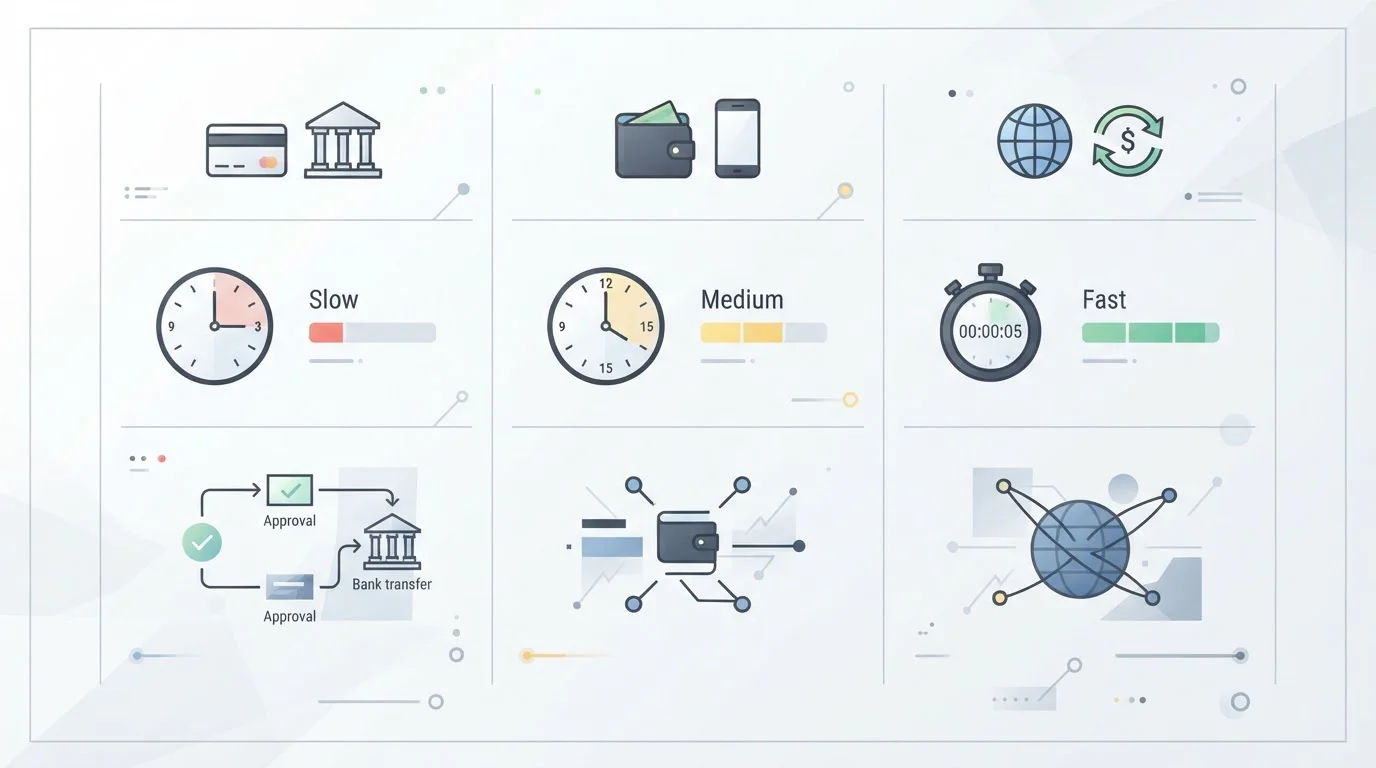
Australian players depositing via Google Pay must select a different method for withdrawals. The three primary options are bank transfer, e-wallets, and cryptocurrency. Each has distinct speed, fee, and limit characteristics.
| Method | Processing Time | Fees | Minimum Withdrawal | Best For |
|---|---|---|---|---|
| Bank Transfer | 1–5 business days | $0–$15 (casino-dependent) | $100–$200 | Players prioritising low fees over speed, large withdrawals ($2,000+) |
| E-Wallet (Skrill, Neteller) | 24–48 hours | $2–$5 per transaction | $20–$50 | Players needing faster access than bank transfer, mid-range withdrawals ($200–$2,000) |
| Cryptocurrency (Bitcoin, Ethereum) | Minutes to hours (blockchain confirmation time) | Network fees ($2–$20 depending on congestion) | $50–$100 | Players prioritising speed and privacy, comfortable with crypto wallet management |
Choosing the Right Withdrawal Method
Bank transfer suits players extracting $2,000 or more who can wait 1–5 business days for settlement. Most offshore casinos charge no withdrawal fee for bank transfers, but your Australian bank may impose an incoming international wire fee ($10–$25 depending on the institution). Commonwealth Bank, NAB, ANZ, and Westpac all charge for incoming international wires; check your fee schedule before selecting this method. Processing times depend on the casino’s internal approval workflow (typically 24–72 hours) plus the wire transfer itself (1–3 business days). Total time from withdrawal request to funds in your Australian bank account ranges from 2 to 5 business days.
E-wallets like Skrill or Neteller compress the timeline to 24–48 hours because the casino sends funds to your e-wallet account rather than through the international banking system. Once the e-wallet receives funds, you can withdraw to your Australian bank account via a separate transaction (Skrill typically takes 1–2 additional business days for AUD withdrawals). The two-step process adds complexity but accelerates access compared to direct bank transfer. E-wallet withdrawals make sense for amounts between $200 and $2,000 where speed matters more than avoiding the $2–$5 per-transaction fee.
Cryptocurrency withdrawals settle within minutes to hours depending on blockchain network congestion and the casino’s confirmation requirements. Bitcoin transactions during low-congestion periods confirm in 10–30 minutes. Ethereum transactions confirm faster (2–15 minutes) but incur higher network fees during peak usage. Casinos typically require 2–3 blockchain confirmations before crediting your external wallet, adding another 20–60 minutes to the process. Once confirmed, the cryptocurrency sits in your external wallet (Coinbase, Binance, or a hardware wallet) rather than your bank account. Converting crypto to AUD and transferring to your bank adds 1–2 business days via Australian exchanges like CoinSpot or Swyftx. Cryptocurrency withdrawals suit players prioritising speed and willing to manage crypto wallet logistics. The method also offers the highest privacy—no bank name or account number touches the casino’s records.
Can you withdraw winnings back to Google Pay at Australian online casinos?
No. Google Pay does not support withdrawals from gambling merchants under any circumstances. Players depositing via Google Pay must select bank transfer, e-wallet (Skrill, Neteller), or cryptocurrency for withdrawals. This restriction is permanent and applies globally, not only in Australia. Offshore casinos cannot bypass it because Google’s payment processor rejects gambling payout transactions at the merchant gateway level. Players should set up a withdrawal method before making their first deposit to avoid delays when requesting a cashout. Most offshore operators require matching deposit and withdrawal methods where possible (if you deposited via card, they prefer you withdraw to the same card), but Google Pay’s one-way nature forces an exception.
Deposit and Withdrawal Limits Explained
Offshore casinos set deposit and withdrawal limits independently of Google Pay itself. Google Pay inherits the transaction limits of your linked card—if your Visa debit card has a $2,000 daily spending cap, Google Pay respects that cap. The casino then imposes its own floor and ceiling on top of your card’s limits.
Minimum deposit requirements across this peer group range from $10 (RocketPlay, WS Casino) to $25 (FairGo). The variation reflects operational positioning rather than payment processor constraints. RocketPlay’s $10 minimum targets casual players and bankroll testers willing to deposit small amounts to evaluate the casino before committing larger sums. FairGo’s $25 minimum signals a mid-tier positioning, filtering out micro-stakes players while remaining accessible to recreational bettors. Maximum deposits per transaction range from $2,500 (FairGo) to $6,000 (WinSpirit). These caps exist to manage the casino’s exposure to rapid deposit velocity, which can indicate problem gambling or money laundering. Players depositing $10,000 in a session will spread that across two transactions at WinSpirit or four at FairGo.
Withdrawal caps impose tighter constraints than deposit caps. Daily withdrawal limits range from $1,000 (FairGo) to $5,000 (RocketPlay). Monthly withdrawal limits range from $10,000 (FairGo) to $50,000 (RocketPlay). These caps directly affect how quickly you can extract winnings. A player who wins $30,000 in a single pokies session will extract that sum in one month at RocketPlay ($30,000 fits under the $50,000 monthly cap) but across three months at FairGo ($10,000 per month). High rollers routinely select casinos based on withdrawal caps rather than game libraries or bonuses because liquidity matters more than promotion size when you are cashing out five figures monthly.
The withdrawal cap spread explains why RocketPlay and National Casino dominate the high-roller segment despite smaller game libraries than competitors. RocketPlay’s $5,000 daily and $50,000 monthly caps give players extracting $40,000 in a single month a clear path. National Casino’s $4,000 daily and $40,000 monthly caps offer similar liquidity. FairGo’s $1,000 daily and $10,000 monthly caps restrict the casino to casual players staking $20–$100 per session and rarely winning more than $5,000 in a month.
Minimum deposit floors correlate with merchant processor tiers. Payment processors charge casinos a fixed fee per transaction plus a percentage. A $10 deposit might incur a $0.30 fixed fee plus 3% ($0.30), totalling $0.60 in processor costs and leaving the casino $9.40 in net deposits. A $25 deposit incurs the same $0.30 fixed fee plus 3% ($0.75), totalling $1.05 and leaving $23.95 net. The processor cost as a percentage of deposit drops from 6% to 4.2% as the deposit size rises. Casinos set minimums to ensure processor costs stay below 5% of the transaction value, which is why $10–$20 minimums dominate and $5 minimums are rare.
Google Pay minimums typically match or undercut direct card minimums at the same casino. RocketPlay’s $10 Google Pay minimum aligns with its $10 Visa minimum. National Casino’s $15 Google Pay minimum matches its $15 Mastercard minimum. The parity reflects payment processor economics: Google Pay transactions settle as tokenized card payments on the backend, so the processor fees are nearly identical. Some casinos offer marginally lower minimums for Google Pay ($10 via Google Pay, $15 via direct card) because digital wallet transactions carry slightly lower chargeback risk, and processors pass that savings through to merchants via fractionally lower percentage fees.

Australian Regulatory Landscape and What It Means for Google Pay Users
Australia prohibits local licensing of online casinos under the Interactive Gambling Act 2001. The federal statute forbids Australian-based operators from offering slots, table games, or live dealer products to Australian residents. It does not prohibit Australian residents from accessing offshore operators licensed elsewhere. This creates a legal grey area where offshore casinos accept Australian deposits without fear of prosecution, and Australian players use those casinos without breaking federal law, but no Australian regulator oversees the offshore operators.
The Interactive Gambling Act and Offshore Casinos
The Interactive Gambling Act targets supply, not demand. An Australian company running an online casino from Melbourne or Sydney would face prosecution and asset seizure under Section 15 of the Act. An Australian resident depositing $100 at a Curacao-licensed casino operating from Willemstad faces no federal penalty. The Act empowers the Australian Communications and Media Authority (ACMA) to enforce compliance by blocking offshore operators via ISP-level domain blocks and pressuring payment processors to decline gambling transactions, but it imposes no fines or criminal liability on individual players.
State and territory gambling regulators (the Victorian Gambling and Casino Control Commission, Liquor and Gaming NSW, the Queensland Office of Liquor and Gaming Regulation, and others) regulate land-based casinos, pokies venues, sports betting, and lotteries within their jurisdictions. They have no authority over online casinos because the Interactive Gambling Act occupies that regulatory space at the federal level. A Victorian resident depositing at Rocket Casino does not violate Victorian gambling laws because those laws do not address online casinos licensed offshore. The transaction exists in federal jurisdiction, where the Act prohibits supply but not consumption.
Why No Australian-Licensed Online Casinos Exist
The Interactive Gambling Act created a licensing vacuum. The federal government prohibited Australian licensing of online casinos but delegated enforcement to ACMA without creating a white-list or safe-harbor regime for offshore operators. No Australian regulatory body issues online casino licences. The Northern Territory issues licences for online sports betting (major Australian bookmakers like Sportsbet and Ladbrokes operate under NT licences), but NT explicitly excludes casino games from its online licensing framework.
The policy rationale in 2001 centred on harm minimization. Land-based casinos operate under strict responsible gambling frameworks, including mandatory self-exclusion registries, ATM restrictions, and venue monitoring. Online casinos lack those physical controls, so the federal government prohibited them entirely rather than attempting to regulate them. Twenty-five years later, the policy remains unchanged despite widespread offshore casino adoption by Australian players. The vacuum pushed the market offshore rather than eliminating it, and Australian players access Curacao-licensed operators without local regulatory protection.
ACMA Enforcement and ISP Blocks
ACMA enforces the Interactive Gambling Act through three mechanisms: issuing formal warnings to offshore operators, coordinating ISP-level domain blocks, and pressuring payment processors to decline gambling merchant transactions. ISP blocks redirect Australian users attempting to access a blocked domain to an ACMA notice page explaining the site is prohibited under Australian law. These blocks are DNS-level and VPN-bypassable, so they function as a compliance signal rather than an airtight barrier.
ACMA maintains a public complaints register where Australian residents can report offshore operators. Once a complaint is filed and ACMA determines the operator violates the Act (by actively promoting services to Australian residents), ACMA coordinates with Australian ISPs—Telstra, Optus, TPG, Aussie Broadband—to implement domain blocks. The blocks roll out inconsistently: one ISP may block the domain within days, another within weeks, and smaller regional ISPs may never implement the block. Players using one ISP may find Rocket Casino accessible while players on another ISP hit the ACMA notice page.
Offshore operators respond to blocks by launching mirror domains. Rocket Casino might operate on rocketcasino24.com after rocketcasino.com gets blocked. The mirror sites function identically—player accounts, balances, and game libraries transfer seamlessly—so the block inconveniences users without shutting down access. ACMA’s block list grows annually, but the regulator lacks resources to block mirror domains as fast as operators launch them.
Bank Blocking Patterns in 2026
Australian banks implemented a voluntary credit card ban on gambling transactions in June 2024. The ban prohibits credit cards (not debit cards) from processing transactions coded as MCC 7995, the merchant category code assigned to gambling merchants. Commonwealth Bank, NAB, ANZ, and Westpac all enforce the ban. The restriction applies to credit cards only because the voluntary agreement framed gambling as a lending risk—credit card gambling increases default rates on unpaid balances, so banks restricted credit access while leaving debit access intact.
Google Pay transactions bypass the credit card ban if your linked card is a debit card. A Visa debit card linked to Google Pay processes gambling deposits normally because MCC 7995 restrictions apply only to credit cards under the voluntary ban. A Visa credit card linked to Google Pay will decline gambling deposits if your card issuer enforces MCC 7995 blocks.
Beyond the formal credit card ban, individual Australian banks have increased transaction monitoring on gambling merchants in 2025–2026. Commonwealth Bank and NAB implemented stricter fraud filters that flag or auto-decline transactions to offshore casino domains even when the linked card is a debit card. The blocks are inconsistent: one $100 deposit to Rocket Casino may clear, the next $100 deposit three days later may decline. The declines do not reference gambling explicitly—you see a generic “transaction declined by issuer” or “contact your bank” message. Calling your bank’s fraud line reveals the decline resulted from a gambling merchant flag, but the bank does not explain why this transaction triggered the flag when previous transactions cleared.
Workarounds exist but carry their own friction. Linking a debit card from a different Australian bank (one with less aggressive gambling-merchant monitoring) to Google Pay may restore deposit functionality. Regional banks and credit unions (Bank of Queensland, Beyond Bank, P&N Bank) tend to enforce fewer gambling blocks than the big four. Cryptocurrency deposits bypass bank involvement entirely—Bitcoin and Ethereum transactions never touch your bank account or card issuer, so MCC 7995 blocks are irrelevant. The trade-off is learning crypto wallet management and absorbing network fees, which range from $2 to $20 depending on blockchain congestion.
Is it legal to use Google Pay at offshore casinos in Australia?
Using Google Pay to deposit at offshore casinos is not illegal for Australian residents. The Interactive Gambling Act 2001 prohibits Australian-based operators from offering online casino games to Australian residents, but it imposes no penalty on Australian residents accessing offshore operators. You face no federal prosecution or fine for depositing $100 at Rocket Casino via Google Pay. The legal risk sits entirely with the offshore operator, which violates the Act if it actively advertises to Australian residents or operates from Australian soil. Offshore operators avoid prosecution by licensing in Curacao, running servers overseas, and avoiding promotional campaigns targeting Australians. The grey-market structure means you access the casino without breaking Australian law, but you also receive no Australian regulatory protection if a dispute arises.
Which Australian banks block Google Pay deposits to offshore casinos?
Commonwealth Bank, NAB, ANZ, and Westpac have all increased transaction monitoring on gambling merchants (MCC 7995) in 2024–2026. The blocks affect both credit and debit cards, though the June 2024 voluntary credit card gambling ban applies only to credit cards. Debit card declines happen when the bank’s fraud detection system flags the merchant as high-risk based on domain reputation, transaction velocity, or prior chargeback history. Regional banks and credit unions (Bank of Queensland, Beyond Bank, P&N Bank, Police Credit Union) enforce fewer gambling merchant blocks than the big four. Players experiencing repeated declines can link a card from a different bank to Google Pay or switch to cryptocurrency deposits to bypass bank-level restrictions entirely.
What happens if my Google Pay deposit is declined at an online casino?
A declined Google Pay deposit means your card issuer rejected the transaction before funds left your account. The casino receives no payment and your balance remains unchanged. The decline message rarely explains the reason—you see “transaction declined by issuer” or “payment failed.” Contact your bank’s customer service or fraud line to determine the cause. Common reasons include insufficient funds, daily spending limit exceeded, gambling merchant block (MCC 7995), or a fraud alert triggered by offshore merchant location. If your bank blocks gambling merchants, link a different card from a different bank to Google Pay or switch to cryptocurrency deposits. If the decline resulted from a fraud alert rather than a policy block, calling your bank and confirming the transaction was intentional may allow the next deposit to clear.

Curacao Licensing: What Your Casino’s licence Actually Guarantees
Every casino listed in this guide operates under a Curacao gaming licence. Curacao is a constituent country within the Kingdom of the Netherlands, located in the southern Caribbean. The Curacao Gaming Control Board (CGCB) issues gambling licences to operators worldwide. These licences are not equivalent to UK Gambling Commission (UKGC) or Malta Gaming Authority (MGA) licences in terms of player protection, but they provide a baseline legal framework for offshore operators and allow payment processors to handle gambling transactions without violating anti-money-laundering regulations.
The Curacao licensing system underwent reform in 2023–2024. Prior to the reform, Curacao issued a small number of “master licences” to companies, which then issued “sub-licences” to individual casino operators. The sub-licence system created confusion about who held regulatory oversight—the master licensee or the CGCB—and disputes often fell through jurisdictional cracks. The reformed system abolished sub-licences and now issues direct licences to individual operators. Old licence designations like “#365/JAZ” referred to sub-licences under the master licensee Antillephone N.V. The reformed system retains those designations but now treats them as direct CGCB licences.
Rocket Casino’s licence #365/JAZ is a direct CGCB licence under the reformed system. The designation no longer implies a sub-licence relationship. Operators with reformed licences must display a validator seal in their website footer linking to the CGCB’s licence verification tool. Clicking the seal should redirect to the CGCB portal showing the operator’s licence number, issue date, and licence holder name. If the seal is missing or the link is dead, the licence claim is suspect.
Curacao licences impose minimal player-protection requirements compared to UKGC or MGA licences. UKGC-licensed operators must participate in the GAMSTOP self-exclusion register, contribute to a dispute resolution scheme, and maintain segregated player funds (player deposits held separately from operating capital). MGA-licensed operators face similar requirements plus stricter advertising restrictions. Curacao licences require operators to display responsible gambling tools (deposit limits, self-exclusion, session time limits) but do not mandate participation in external registries or compensation schemes. If a Curacao-licensed casino seizes your balance or delays a withdrawal indefinitely, your recourse is limited to the casino’s internal dispute process and filing a complaint with the CGCB. The CGCB rarely intervenes in individual disputes unless systemic fraud is evident.
The primary value of a Curacao licence for Australian players is legitimacy signalling. A Curacao-licensed operator can establish merchant accounts with payment processors that require gambling licences for anti-money-laundering compliance. Unlicensed operators struggle to process deposits and withdrawals because processors classify them as high-risk and refuse service. A Curacao licence signals to processors that the operator meets baseline regulatory standards, even if those standards are lower than UKGC or MGA requirements. For players, the licence means the casino is more likely to remain operational long enough to process your withdrawal, but it does not guarantee fair treatment or fast payouts.
How do I verify a casino’s Curacao licence is legitimate?
Visit the casino’s website footer and locate the Curacao Gaming Control Board validator seal. Click the seal. It should redirect to the CGCB’s licence verification portal displaying the casino’s licence number, issue date, and licence holder name. If the seal redirects to a generic page or produces a 404 error, the licence claim is fake. Some casinos display static images of validator seals without linking to the CGCB portal. A static image without a clickable link is a red flag—legitimate operators link the seal to the verification portal. Cross-reference the licence holder name in the CGCB portal with the casino’s footer disclosure. If the casino claims to operate under “Play Logia N.V.” but the CGCB portal lists a different entity, the licence is misrepresented or expired. Players should verify licences before depositing to avoid unlicensed operators that disappear with balances.
Bonuses and Promotions for Google Pay Users
Offshore casinos rarely restrict bonuses by payment method in 2026. Google Pay deposits qualify for welcome bonuses, reload bonuses, and free spins promotions under the same terms as direct card deposits or bank transfers. A minority of operators exclude e-wallet deposits (Skrill, Neteller) from bonus eligibility, but Google Pay does not fall under e-wallet exclusions because it processes as a tokenized card payment rather than a stored-value wallet.
Welcome bonuses at the casinos listed here follow standard offshore structures: 100% to 200% match on your first deposit, capped between $500 and $1,500, plus 20 to 50 free spins on selected pokies. Rocket Casino offers 100% up to $500 plus 25 no-deposit free spins on registration. National Casino offers up to $1,500 split across the first three deposits plus 50 no-deposit free spins. RocketPlay varies bonuses by region but typically offers a first-deposit match in the 100%–150% range. These bonuses carry wagering requirements between 30x and 40x, meaning you must wager the bonus amount (sometimes bonus plus deposit) 30 to 40 times before withdrawing any winnings derived from the bonus.
Wagering contributions vary by game type. Pokies contribute 100% toward wagering requirements, so a $10 spin on a Pragmatic Play pokie counts as $10 of wagering progress. Table games contribute 10% to 20%, so a $10 blackjack hand counts as $1 to $2 of progress. Live dealer games often contribute 0%, meaning no progress toward bonus clearing. This structure pushes bonus players toward pokies, where volatility is higher and the house edge per spin is steeper than blackjack or roulette but wagering progress accumulates faster.
Rocket Casino’s 15% weekly cashback with zero wagering requirements is an outlier. Most offshore operators attach 1x to 5x wagering to cashback, locking the returned funds into further play before withdrawal. Rocket Casino’s no-wagering cashback is immediately withdrawable, which suits players who lost $1,000 during the week and receive $150 back without strings. That $150 can be withdrawn directly or staked on one session without rollover obligations.
WinSpirit’s Wednesday no-wagering bonus is similarly rare. The promotion runs weekly on selected pokies, offering a match bonus or free spins package with zero rollover. Winnings from the bonus are withdrawable immediately. Most offshore bonuses lock winnings behind 30x to 40x wagering over 7 to 30 days. WinSpirit’s no-wagering structure compresses the bonus cycle into a single session, appealing to players who prefer clean wins over extended grinding.
Bonus terms at offshore casinos routinely include maximum bet restrictions during wagering. A typical clause caps bets at $5 or $8 per spin while a bonus is active. Exceeding the cap voids the bonus and any winnings derived from it. The restriction exists to prevent bonus abuse via high-variance betting strategies (betting $100 per spin on a high-RTP pokie to clear wagering quickly). Players clearing bonuses should verify the max bet rule before spinning above $5 per round.
Google Pay for Pokies, Slots, and Live Dealer Games
Google Pay deposits fund your casino balance as a lump sum. Once deposited, the funds are fungible—you can stake them on pokies, live dealer blackjack, or sports betting (at operators like RocketPlay that integrate sportsbooks) without restriction. The payment method does not dictate game availability. A $100 Google Pay deposit at National Casino unlocks the same 3,000+ game library as a $100 bank transfer deposit.
Pokies dominate the game libraries at these offshore operators. Pragmatic Play, NetEnt, Hacksaw Gaming, and Microgaming supply the majority of titles, spanning classic three-reel fruit slots, five-reel video pokies with free spins and multipliers, and modern mechanics like Megaways (Big Time Gaming), cluster pays (NetEnt), and cascading reels (Pragmatic Play). RTP percentages range from 94% to 97% depending on the provider and title. Pragmatic Play’s Wolf Gold runs at 96.01% RTP. NetEnt’s Starburst runs at 96.09%. RTG’s Aztec’s Millions (available at Ozwin Casino) runs closer to 95%.
Live dealer games at Rocket Casino, National Casino, WinSpirit, and WS Casino run on Evolution Gaming’s platform. Evolution dominates the live dealer space in 2026 with Lightning Roulette (random multipliers applied to straight-up bets each round), Crazy Time (a game-show format mixing wheel spins and bonus rounds), and standard blackjack/roulette/baccarat tables. Ignition Casino and Ozwin Casino use Visionary iGaming for live dealer, a smaller provider offering fewer tables but less crowded gameplay—Evolution tables routinely seat seven players per blackjack hand, Visionary tables average three to four.
Google Pay deposits clear instantly, so there is no waiting period between deposit and game access. Players depositing $200 via Google Pay at 8pm can spin pokies or join a live blackjack table by 8:01pm. Cryptocurrency deposits require blockchain confirmation before the casino credits your balance (10–30 minutes for Bitcoin, 2–15 minutes for Ethereum), and bank transfers take 1–3 business days. Google Pay’s instant settlement is its primary advantage for players who decide to gamble on short notice.
Mobile Casino Compatibility and New Casino Options
Google Pay is mobile-native. The app launched on Android in 2016 and integrates deeply with Android’s NFC hardware for tap-to-pay functionality. Australian players using Android phones or tablets can deposit via Google Pay without switching devices or re-entering card details. The biometric authentication layer (fingerprint or face scan) is faster than typing a 16-digit card number and CVV on a mobile browser form.
Desktop users can access Google Pay through Chrome browser on Windows, macOS, or Linux. The desktop flow prompts you to authenticate the transaction on your paired Android device, so your phone must be nearby and unlocked. Some offshore casinos restrict Google Pay to mobile browsers only, detecting the device type via user-agent strings and hiding the payment option on desktop. This restriction is inconsistent across operators—Rocket Casino and National Casino support Google Pay on both mobile and desktop, while smaller operators may limit it to mobile.
iOS compatibility is limited. Apple restricts NFC access on iPhones to Apple Pay exclusively, so Google Pay cannot support tap-to-pay on iPhones. Browser-based Google Pay deposits work on Safari (iPhone/iPad) but require manual card selection and authentication via PIN rather than biometric, reducing the convenience advantage over direct card entry. Australian players on iPhones who want the fastest deposit experience should use Apple Pay if the casino supports it, or default to direct card deposits.
New casinos entering the Australian offshore market in 2025–2026 include Spinko Casino, Crazy Tower Casino, and Andromedasino Casino, all Curacao-licensed. These operators launch with similar game libraries (Pragmatic Play, NetEnt, Evolution live dealer), match bonuses in the 100%–200% range, and Google Pay integration from day one. New casinos offer no structural advantage over established operators like Rocket Casino or Ignition Casino beyond novelty. Established operators have longer payout track records and more player forum feedback, reducing the risk of selective withdrawal delays or sudden operational shutdowns. New casinos may offer larger launch bonuses to attract initial deposits, but those bonuses carry the same 30x to 40x wagering requirements as established-operator bonuses.
Can you use Google Pay on iPhone for casino deposits in Australia?
Yes, but functionality is limited compared to Android. Google Pay works in Safari and other iOS browsers via manual card selection and PIN authentication. Apple restricts NFC access to Apple Pay exclusively, so tap-to-pay does not function on iPhones. The browser-based flow requires more steps than the Android flow (open Google Pay app, select card, authenticate biometrically). Australian players on iPhones seeking the fastest deposit experience should use Apple Pay if their chosen offshore casino supports it. If the casino only supports Google Pay, the deposit will work but without the seamless biometric authentication available on Android.
Responsible Gambling Tools at Google Pay Casinos
Offshore casinos operate outside Australian regulatory oversight, so responsible gambling tool quality varies. Curacao licences require operators to offer deposit limits, loss limits, and self-exclusion options, but enforcement is inconsistent. The casinos listed here all display responsible gambling sections in their account settings, though the depth and usability of those tools differ.
National Casino provides the most comprehensive toolkit in this peer group: deposit limits (daily, weekly, monthly), loss limits (daily, weekly, monthly), session time limits (lock out after a set number of hours), and self-exclusion periods ranging from 24 hours to permanent. Players set these limits in their account dashboard, and the system enforces them at the transaction level—attempting a deposit that exceeds your daily limit produces an error and blocks the transaction. Reality-check popups interrupt play every 60 to 120 minutes, displaying session length and net profit/loss. The features mirror UKGC-licensed operator requirements, though National Casino operates under a Curacao licence and faces no external audit of these tools.
Rocket Casino and RocketPlay offer deposit limits and self-exclusion but lack session time limits and loss limits. The deposit limit system functions identically—set a daily/weekly/monthly cap in your account settings, and the system rejects deposits exceeding the cap. Self-exclusion periods include 1 week, 1 month, 3 months, 6 months, and permanent. Activating self-exclusion locks your account immediately and prevents login until the period expires. Permanent self-exclusion cannot be reversed, so the casino prompts you to confirm three times before activating it.
WinSpirit, Ignition, FairGo, Ozwin, and WS Casino offer basic deposit limits and self-exclusion without session time limits, loss limits, or reality-check popups. These operators meet the minimum Curacao licensing requirement but do not approach UKGC standards. Players seeking robust harm-minimization tools should prioritise National Casino or Rocket Casino over smaller operators.
Google Pay itself offers no gambling-specific controls. The app does not track or flag gambling transactions differently from other purchases. Your card issuer may offer gambling blocks—Commonwealth Bank and NAB allow customers to enable gambling merchant blocks via their mobile banking apps, preventing all MCC 7995 transactions regardless of payment method. That block would prevent Google Pay deposits to offshore casinos because the transaction settles as a card payment coded MCC 7995 on the backend. Players seeking external controls beyond the casino’s internal tools can enable gambling blocks at the card-issuer level, though this prevents all gambling transactions (online and land-based) rather than targeting online casinos specifically.
Australian gambling harm-minimization resources include Gambling Help Online (1800 858 858, available 24/7), Lifeline (13 11 14), and BeyondBlue (1300 22 4636). These services offer free counselling and referral to face-to-face support for Australians experiencing gambling harm. Self-exclusion from offshore casinos does not integrate with Australian state-level self-exclusion registers (Victoria’s YourPlay, NSW’s ClubSafe), so players using offshore operators must manage self-exclusion separately from their domestic gambling activity.
Do Google Pay casino deposits have fees in Australia?
Google Pay charges no fees for transactions. The app is free to download and free to use for payments. Your linked card’s terms determine whether fees apply. Most Australian debit cards charge no fees for domestic purchases, but offshore casino deposits may incur foreign transaction fees if the merchant processes the payment in a currency other than AUD. Commonwealth Bank Visa debit cards charge 3% on foreign currency transactions. NAB debit cards charge 3%. ANZ charges 3%. Westpac charges 2.5%. Check your card’s fee schedule to determine whether your casino deposit will incur a foreign transaction fee. Some offshore casinos process AUD deposits and display balances in AUD, avoiding foreign transaction fees. Others process deposits in USD or EUR and convert at the prevailing exchange rate, triggering foreign transaction fees. The casino’s cashier page usually discloses the processing currency before you confirm the deposit.
Casino Deposit Methods Australia 2026 — Compared
Content created by the «Bankroll» team