
Top Visa Casinos for Australian Players — Deposits, Withdrawals & Banking Compared
 Available in AU

Most Australian players already have a Visa card in their wallet. Using it at an online casino should be straightforward—enter the amount, confirm the details, play. Reality is messier. Some casinos list Visa in the cashier but route deposits through processors that Australian banks routinely block. Others accept Visa deposits without friction but force you onto crypto or bank transfer when you want to cash out. The 2024 credit card ban knocked Visa credit off the table entirely, leaving only debit cards standing.
This guide maps which offshore casinos actually work with Visa for Australian players in 2026, what deposit and withdrawal arrangements apply at each, and where the friction points hide. Ten operators reviewed in full, withdrawal routes stated explicitly, transaction limits confirmed per casino. No generic “Visa is convenient” filler—just the applied banking details that help you pick a site and avoid the cashier surprises.
Top Visa Casinos for Australian Players in 2026
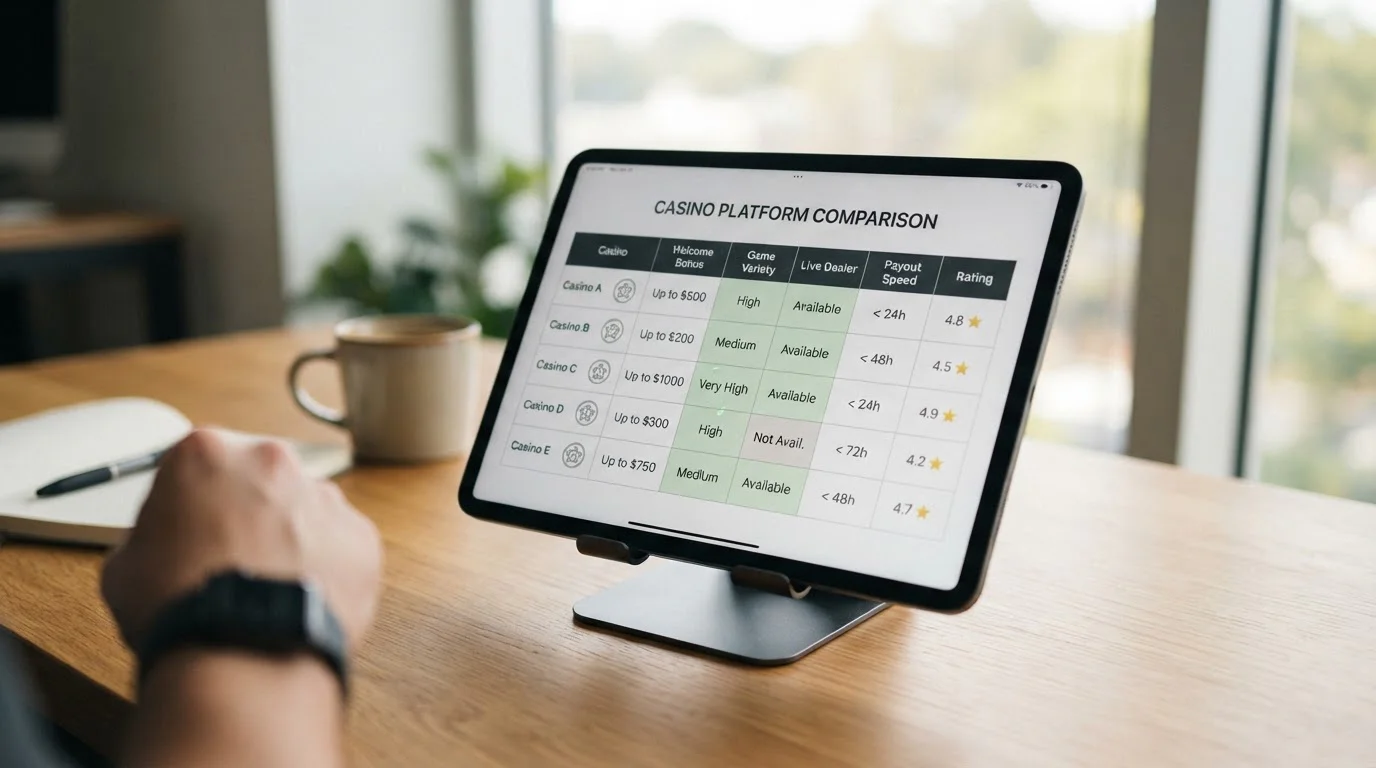
Can I use my Visa card at online casinos in Australia?
Yes, but only Visa debit cards. Since mid-2024, Australian law prohibits using credit cards for online gambling—sports betting, offshore casinos, all of it. Debit cards remain legal and widely accepted at offshore casinos targeting Australian players. Whether your deposit succeeds depends on your card issuer, the casino’s payment processor, and how that processor classifies the transaction. Commonwealth Bank might wave one through while NAB declines it; the same casino can behave differently for two players holding cards from different issuers.
The casinos below all accept Visa debit deposits from Australian players as of September 2026, with minimums starting at A$10–A$20. Withdrawal support varies—some let you cash out to the same Visa card, others require crypto or bank transfer. The comparison table and individual breakdowns state which route applies where.
| Casino | Licence | Min Deposit | Max Visa Transaction | Withdrawal Notes | Best For |
|---|---|---|---|---|---|
| Lucky Elf | Curaçao (Dama N.V.) | A$20 | A$4,000 | Visa withdrawals supported (A$20–A$3,000), 1–3 days | Best overall Visa experience, two-way banking |
| Winz | Curaçao (Dama N.V.) | A$20 | A$4,000 | Crypto or alternatives preferred for cashouts | Wagering-free bonuses, instant crypto withdrawals |
| Ripper | Curaçao (Deckmedia N.V.) | A$20 | Not specified | Varies, check cashier | Flexible bonus codes (150%–225%), Aussie brand |
| Fair Go | Curaçao (Deckmedia N.V.) | A$20 | Not specified | Varies, crypto/bank transfer typical | Classic RTG pokies, AU-dedicated since 2017 |
| Neospin | Likely Curaçao | A$100 | Not specified | Varies | Higher entry, larger absolute bonus (AU$1,000) |
| RickyCasino | Likely Curaçao | A$10 | Not specified | Varies | Lowest minimum deposit (A$10) |
| Hell Spin | Likely Curaçao | A$15 | Not specified | Varies | Mid-tier bonus + 100 free spins |
| Rolling Slots | Likely Curaçao | Not specified | Not specified | Varies | AU$400 bonus |
| Casino Rocket | Likely Curaçao | Not specified | Not specified | Varies | AU$500 bonus |
| Need For Spin | Likely Curaçao | A$20 | Not specified | Varies | AU$400 bonus + 70 free spins |
Lucky Elf Casino — Best Overall for Visa Deposits and Withdrawals
Lucky Elf operates under Dama N.V. out of Curaçao (licence GLH-OCCHKTW0705052021), launched in 2022 with Australian players clearly in the crosshairs. The game library runs to 13,000+ titles from 60 providers—Pragmatic Play, NetEnt, Play’n GO, Yggdrasil, Hacksaw, Nolimit City, Push Gaming, the usual suspects plus deeper cuts from Relax Gaming and ELK Studios. Live dealer coverage comes via Evolution, Ezugi, and Pragmatic Live. AUD is native currency, no forced USD conversion eating your deposit on the way in.
What sets Lucky Elf apart in a Visa context is explicit two-way banking clarity. Visa deposits start at A$20, cap at A$4,000 per transaction, and carry no casino-side fees (your bank may still charge its own currency-conversion or offshore-transaction fee, but that sits outside the casino’s control). Withdrawals to Visa run A$20 minimum up to A$3,000 per transaction, processed within 1–3 banking days for Visa routes and as fast as instant to 15 minutes for crypto or priority methods. Most offshore casinos accept Visa deposits but quietly push you onto crypto or bank transfer when you try to cash out; Lucky Elf supports the reverse route, which matters if you’re not holding Bitcoin and don’t want to open a wallet just to collect winnings. Welcome package runs $5,500 plus 350 free spins across your first deposits—not the richest offer in the comparison, but the banking practicality outweighs headline bonus size when you’re choosing where to actually deposit.
Winz Casino — Wagering-Free Bonuses and Instant Cashouts
Winz shares the same operator as Lucky Elf—Dama N.V., Curaçao licence, launched 2020. Where it diverges is promotional structure and cashout speed. The headline value is massive: up to $18,000 or 800 free spins per deposit, claimable three times weekly. That’s not a typo or a one-time welcome gimmick—the offer resets multiple times per week. The real differentiator is that Winz bonuses carry zero wagering requirements. You deposit, claim the bonus, win $500 from bonus funds, and that $500 is immediately withdrawable. No 30x playthrough, no max-cashout cap buried in fine print, no “bonus balance” versus “real balance” accounting tricks. It’s the cleanest bonus structure in this entire comparison.
Visa deposits start at A$20, max out at A$4,000 per transaction, same setup as Lucky Elf. The catch—and it’s stated upfront on review sites rather than hidden—is that Winz works better as a Visa deposit casino than a Visa withdrawal casino. Crypto routes (Bitcoin, Ethereum, Litecoin, USDT, others) handle cashouts faster and with less friction; instant withdrawals are processed in minutes to hours for crypto, while Visa payouts can stretch longer or require switching to bank transfer depending on your card issuer’s reverse-transaction policies. If you’re comfortable holding a Bitcoin wallet or using an exchange, Winz becomes one of the strongest value propositions in the list. If you need Visa both ways, Lucky Elf remains the cleaner fit. The casino runs on the SoftSwiss platform, hosting 7,000–8,000 games from the usual provider lineup, and the loyalty program (WinzUp) throws cashback and exclusive promos at regular players.
Ripper Casino — Flexible Bonus Codes for Aussie Players
Ripper launched in 2021 under Deckmedia N.V. (the same operator behind Fair Go), and the Australian theming is laid on thick—name, imagery, slang, the lot. It’s not a multi-geo casino that happens to accept Australian players; it’s built for them. The game library sits around 4,000 titles from 40+ providers, covering pokies, live dealer, and table games. Betsoft, Pragmatic Play, NetEnt, Play’n GO, Quickspin, Yggdrasil, Relax Gaming all present. AUD support native.
The Visa setup: A$20 minimum deposit, no maximum transaction figure published in review sources (you’ll see it in the cashier when you log in), and the usual Curaçao-licence caveat that withdrawal routes vary depending on processor and issuer. What makes Ripper worth listing here is bonus-code flexibility. Most casinos give you one welcome offer—take it or leave it. Ripper lets you pick your risk-reward balance via code: RIPPER150 for a 150% match, RIPPER175 for 175%, RIPPER200 for 200%, RIPPER225 for 225%. Total package scales up to AU$7,500 depending on how aggressive you want your first deposits. There’s also a free-spins welcome option on a featured pokie, plus 20 free spins no deposit at sign-up. That structure appeals to bonus hunters who want control over playthrough-versus-value tradeoffs rather than a one-size offer. If you’re chasing high-percentage bonuses and you like the classic Aussie casino vibe, Ripper slots in between the premium giants (Lucky Elf, Winz) and the RTG-nostalgia option (Fair Go).
Fair Go Casino — Classic RTG Pokies and AU-Dedicated Experience
Fair Go is the oldest operator in this list, running since 2017 under Deckmedia N.V. with a Curaçao licence. The domain is fairgo.com.au—not .com, not .io, .au. Every detail screams Australian: the imagery, the bonus copy, the support hours, the banking options. Where most offshore casinos try to serve fifteen markets at once, Fair Go picked one and committed. The tradeoff is a smaller, more focused game library built almost entirely on RTG (RealTime Gaming) and SpinLogic titles. If you grew up playing RTG pokies at older Aussie-facing casinos, the game feel here is familiar. If you’re used to Pragmatic Play or NetEnt, the library will feel dated and narrow.
Visa deposits start at A$20. Withdrawal routes lean toward Neosurf (cash vouchers you can buy at Australian newsagents), Bitcoin, and bank transfer rather than reverse Visa transactions; check the cashier before depositing if Visa cashouts matter to you. The welcome structure gives two entry points: 100 free spins no deposit on Plentiful Treasure (rare among top casinos—most require a deposit before handing out spins), or deposit-based codes 25WIN100 (deposit $25, get $100 bonus) and WELCOME (100% match up to $200, claimable five times on deposits of $20 or more). The 100-spin no-deposit offer is a genuine test-drive—sign up, spin, see if the RTG game feel suits you, withdraw if you hit (subject to verification and max-cashout caps). Fair Go isn’t the flashiest casino on this page, but it’s the most Australian, and the longest-running. If you value operational history over cutting-edge design, it’s a safe Visa-deposit option.
Neospin Casino — Higher Entry, Larger Bonus Value
Neospin sits in the middle tier of this comparison with limited public operator data (likely Curaçao-licensed based on market positioning). What sets it apart is the entry point: AU$1,000 bonus at 66% match, but the minimum deposit jumps to $100. Most casinos on this page start at A$10–A$20; Neospin assumes you’re committing more upfront. The wager requirement is 40x, standard for the tier. Withdrawal cap sits at $15,000 per transaction. The provider lineup includes Betsoft, Playson, Booongo, plus 51 others (54 total), covering pokies, table games, and live dealer.
The higher minimum makes Neospin less attractive for cautious first-timers testing an offshore casino with an A$20 deposit, but it works for players who know they’re depositing $100+ anyway and want the larger absolute bonus value (AU$1,000 at 66% beats AU$150 at 100% in raw dollars, even if the percentage looks weaker). Visa deposit support confirmed; withdrawal routes not specified in available review data, so assume the usual offshore-casino pattern of crypto or bank transfer for cashouts. If you’re past the testing phase and ready to commit a larger deposit, Neospin’s bonus structure delivers more cash value than the low-entry competitors.
RickyCasino — Low Minimum Deposit Option
RickyCasino offers the lowest confirmed minimum deposit in this comparison: A$10. The bonus is modest—AU$150—and the provider count is healthy (57 providers including Microgaming, Betsoft, NetEnt, plus 54 others). Withdrawal cap is $15,000 per transaction. Likely Curaçao-licensed based on market positioning; detailed operator information sparse in public review sources.
The appeal here is entry friction. If you want to test an offshore casino’s cashier, game library, and withdrawal process with minimal commitment, RickyCasino’s A$10 floor is the lowest in the group. The AU$150 bonus won’t carry you far compared to Ripper’s AU$7,500 or Neospin’s AU$1,000, but the point of an A$10 deposit isn’t chasing maximum bonus value—it’s de-risking your first interaction with an offshore operator you’ve never used before. Visa deposit confirmed; withdrawal routes variable (check cashier).
Hell Spin Casino — Mid-Tier Bonus with Free Spins
Hell Spin lands in the mid-tier bonus range: AU$600 at 50% match plus 100 free spins. Minimum deposit A$15. Wager requirement 40x. Withdrawal cap $15,000. Providers include Playtech, Betsoft, Playson, and others. Likely Curaçao-licensed; detailed operator data limited in public sources.
The free-spins bundle (100 spins) adds value if you’re planning to play pokies rather than table games, and the A$15 minimum is low enough for cautious entry. The 50% match percentage is weaker than Ripper’s 150%–225% or Fair Go’s 100%, but the AU$600 absolute value plus spins package balances out for mid-sized deposits. Visa deposit supported; withdrawal routes variable.
Rolling Slots Casino
Rolling Slots offers an AU$400 bonus. Minimum deposit, provider count, and withdrawal specifics not confirmed in available research data; likely Curaçao-licensed. Appears in top-ranking affiliate lists, indicating market presence, but public detail sparse. Visa deposit confirmed. If considering this casino, verify cashier limits and withdrawal routes in the live cashier before depositing.
Casino Rocket Casino
Casino Rocket lists an AU$500 bonus. Operator, licence, minimum deposit, and provider details limited in public sources. Likely Curaçao-licensed based on market positioning. Visa deposit supported; withdrawal arrangements to be confirmed in cashier. Falls into the secondary tier of this comparison due to sparse verifiable data.
Need For Spin Casino
Need For Spin offers AU$400 plus 70 free spins. Minimum deposit A$20. Wager requirement is 45x—higher than the typical 35x–40x, which reduces bonus appeal slightly. Withdrawal cap $15,000. Providers include Betsoft, Playson, Booongo, plus 34 others (37 total). Likely Curaçao-licensed.
The 45x wager is the sticking point. If you’re depositing $100 and claiming a $40 bonus (at typical match percentages), you’re required to wager $1,800 ($40 × 45x) before withdrawing bonus-derived winnings. That’s higher friction than Ripper (typically 35x) or Fair Go (30x). The free-spins bundle softens the deal, but the elevated playthrough makes Need For Spin a weaker bonus proposition unless the game library specifically appeals.
How Visa Deposits Work at Australian Online Casinos
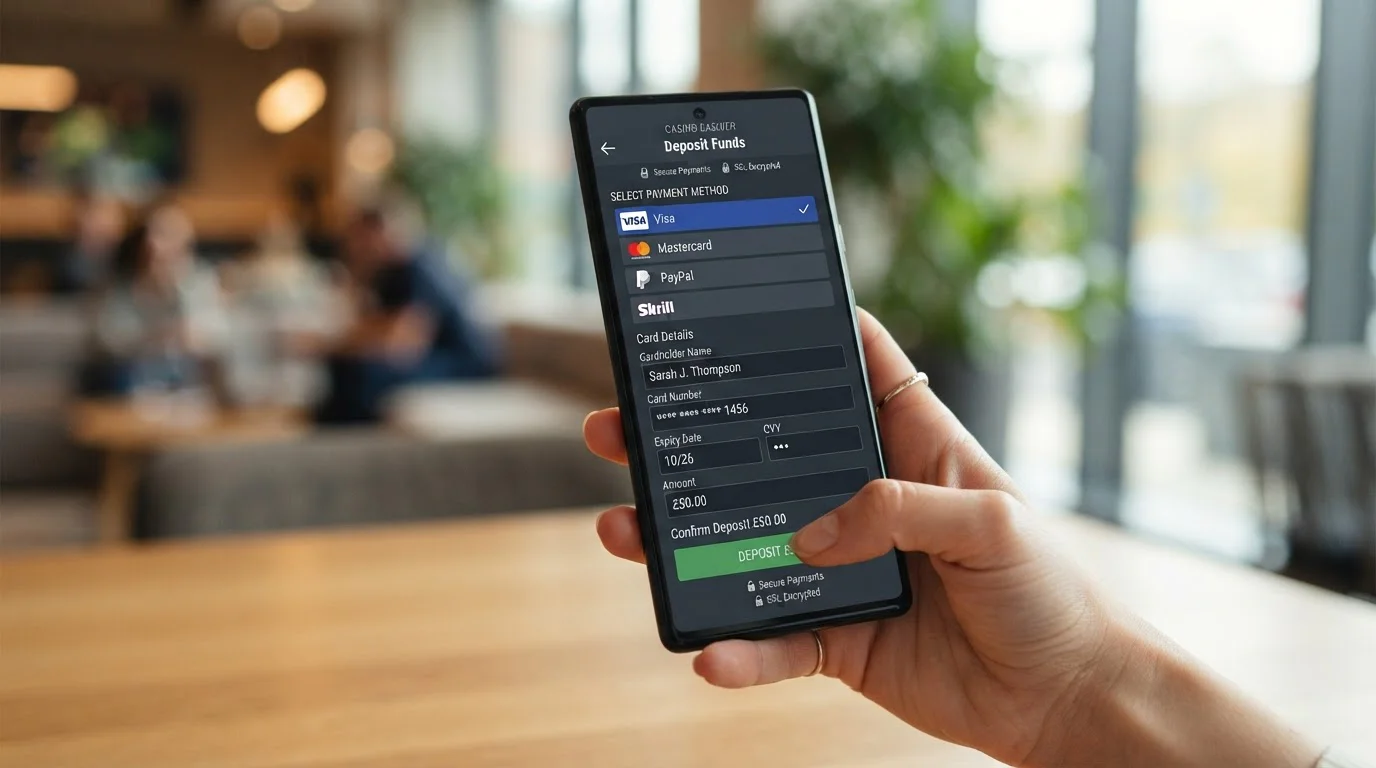
The deposit mechanics are simple when they work. Log into your casino account, navigate to the cashier, select Visa as your payment method, enter the card number, expiry date, and CVV code from the back of the card. Choose your deposit amount—minimum usually A$10 to A$20, maximum varies but sits around A$4,000 for casinos that publish the figure. Confirm the transaction. If your card issuer and the casino’s payment processor both approve it, the balance credits to your account within seconds. Most of the time, Visa deposits are instant.
The friction shows up in what happens before you hit confirm. Australian banks classify offshore gambling transactions under merchant category code 7995 (gambling). Some issuers block MCC 7995 transactions by default as a fraud-prevention measure or as policy. Others allow them but flag repeated offshore gambling payments for manual review. Commonwealth Bank might approve your Visa debit deposit to Lucky Elf while NAB declines the same transaction to the same casino using a different card. The casino isn’t rejecting you—your bank is stepping in before the payment clears the issuer’s gateway.
If a deposit goes through, you’ll see the charge on your card statement within one to three business days, usually labelled with a processor name rather than the casino brand (part of how offshore operators route payments to minimize issuer blocks). If the deposit fails, you’ll see an instant decline message in the cashier. Don’t retry the same card three times hoping the fourth attempt works—you’re more likely to trigger a temporary block on your card than fix the underlying issue.
The Deposit Process Step-by-Step
Choose a casino from the comparison table. Sign up, complete the registration form with your real name and address (verification happens before your first withdrawal, and mismatched details cause delays). Navigate to the cashier or deposit page. Select Visa or Visa Debit from the payment-method menu. Enter your deposit amount—stay above the minimum (usually A$20) and below the maximum per transaction (A$4,000 at Lucky Elf and Winz, variable elsewhere). Enter your 16-digit card number, expiry date (MM/YY), and the three-digit CVV code from the back of the card. Confirm the transaction.
The processor sends an authorization request to your card issuer. Your bank checks available funds, flags the merchant category code, applies its internal fraud rules, and either approves or declines. Approved transactions credit your casino balance instantly. Declined transactions return an error message—usually generic (“transaction failed,” “card declined,” “payment not authorized”) without stating the specific reason. If you get a decline, try a different card from a different issuer, or switch to an alternative payment method like Neosurf, bank transfer, or crypto if the casino supports it.
Verification might be required before your first deposit clears, especially for larger amounts. The casino emails you requesting proof of identity (driver’s licence, passport) and proof of address (utility bill, bank statement dated within the last three months). Upload the documents through the casino’s secure portal. Verification typically takes a few hours to one business day. Some casinos skip verification at the deposit stage and only enforce it before your first withdrawal; others require it upfront. Either way, have your documents ready.
Minimum Deposits and Transaction Limits
What are the minimum and maximum Visa deposit limits at Australian casinos?
Minimum Visa deposits across the casinos in this comparison range from A$10 (RickyCasino) to A$100 (Neospin). Most sit at A$20, which is the effective standard for offshore casinos targeting Australian players. Maximum transaction limits are less commonly published—Lucky Elf and Winz both cap Visa deposits at A$4,000 per transaction, but many casinos omit the upper figure from their cashiers and payment-method pages. You’ll see the limit when you attempt a deposit above it; the form throws an error or auto-adjusts your amount downward.
Why the A$4,000 cap? Payment processors and card networks impose per-transaction limits to manage risk on high-value gambling payments. If you’re planning to deposit more than A$4,000, split it across multiple transactions spaced a few minutes apart, or use bank transfer or crypto for larger single deposits (both methods often support higher limits). Visa works best for small- to mid-sized deposits; once you’re moving five-figure sums, bank transfer and Bitcoin become more efficient.
Daily and weekly deposit limits vary by casino and are sometimes adjustable through responsible-gambling settings. Lucky Elf, for example, lets you set your own daily deposit cap in the account settings. If you hit a self-imposed limit, the cashier locks you out until the period resets. This is a feature, not a bug—most offshore casinos targeting Australia build in responsible-gambling tools to match the cultural expectation even though they’re not subject to Australian regulatory oversight.
Fees and Processing Times
Are Visa deposits at online casinos instant?
Yes, Visa deposits process instantly in most cases. Once your card issuer approves the transaction, the casino balance updates within seconds. Occasional delays happen if the processor queues the payment for manual review (usually on first deposits above A$500 or when account details trigger a fraud check), but standard A$20–A$100 deposits from verified accounts credit immediately.
Casino-side fees for Visa deposits are rare—Lucky Elf, Winz, Ripper, and Fair Go all advertise zero fees for Visa transactions. Your bank may still charge a currency-conversion fee if the casino processes in USD or EUR and converts to AUD on your card statement, or an offshore-transaction fee (typically 2–3% of the deposit amount) depending on your card issuer’s policies. Check your card’s fee schedule before depositing. Some Australian banks waive offshore-transaction fees on debit cards; others don’t.
Processing times on the casino side are instant. Processing times on the issuer side—the window between you hitting confirm and your bank approving the authorization request—run under five seconds for most Australian Visa debit cards. If a deposit takes longer than ten seconds to confirm or fail, the processor is likely running additional fraud checks in the background. Wait for the confirmation message before retrying; duplicate submissions can cause double-charges that take days to reverse.
Withdrawing Winnings with Visa — What You Need to Know

Can I withdraw winnings back to my Visa card?
Sometimes. Lucky Elf explicitly supports Visa withdrawals from A$20 to A$3,000 per transaction, processed within 1–3 banking days. Winz accepts Visa deposits but steers cashouts toward crypto or alternative methods—faster processing, less issuer friction. Ripper, Fair Go, and the secondary-tier casinos list Visa in the deposit menu but give vague or absent detail on whether Visa reverse transactions (crediting winnings back to the same card) actually work. The practical rule: assume Visa works for deposits, not for withdrawals, unless the casino states otherwise.
Why the one-way friction? Card issuers and processors treat gambling credits differently from gambling debits. A debit (you paying the casino) flows through the standard purchase authorization system. A credit (the casino paying you) triggers different risk checks, and many issuers simply block gambling-merchant credits by policy. Even when a casino supports Visa withdrawals on its end, your bank may reject the incoming transaction, forcing the casino to offer you bank transfer or crypto instead.
If Visa withdrawals matter to you—if you don’t want to touch Bitcoin and you’d rather see winnings land back on the card you deposited from—Lucky Elf is the clearest confirmed option in this comparison. For everyone else, expect to withdraw via bank transfer (3–5 business days, sometimes longer), cryptocurrency (instant to a few hours), or e-wallets like Skrill or Neteller if the casino supports them. Neosurf works for deposits at Fair Go but not for withdrawals (it’s a prepaid voucher, no reverse route).
Withdrawal Limits and Processing Times
Visa withdrawal limits, where supported, mirror deposit ranges. Lucky Elf runs A$20 minimum to A$3,000 maximum per transaction. If you win A$10,000, you’ll split it across multiple withdrawal requests (three separate A$3,000 payouts plus one A$1,000 payout). Daily and weekly withdrawal caps also apply—common setups include A$5,000 per day or A$20,000 per week, but limits vary by casino and sometimes by account tier (VIP players often get higher caps). Check the withdrawal page or contact support before assuming you can cash out six figures overnight.
Processing times for Visa withdrawals run 1–3 banking days at Lucky Elf, starting from when the casino approves your withdrawal request (not from when you click the button). Approval itself can take 24–48 hours while the casino’s finance team verifies your account and checks for bonus-abuse red flags. Once approved, the payout hits your card within one to three business days. Weekends and public holidays delay it further—submit a withdrawal Friday afternoon and it may not land until the following Wednesday.
Crypto withdrawals bypass most of that delay. Winz, for example, processes Bitcoin payouts within minutes to a few hours. No 1–3 banking days, no weekend holds, no card-issuer reversals. If speed matters and you’re comfortable with crypto, it’s the faster route. If you’re not, and you’re willing to wait, Visa withdrawals work at Lucky Elf but patience is required.
Alternative Payout Methods
Bank transfer is the most common Visa alternative. You provide your BSB and account number, the casino initiates an international or domestic transfer (depending on how they route it), and the funds land in your Australian bank account within 3–5 business days, sometimes up to seven if intermediary banks delay the routing. Fees vary—some casinos cover the transfer cost, others charge A$10–A$30 per withdrawal. Check the withdrawal page before requesting a payout.
Cryptocurrency—Bitcoin, Ethereum, Litecoin, USDT—is faster and often fee-free (you pay only the blockchain network fee, usually a few dollars). Winz and Lucky Elf both support crypto withdrawals. If you’ve never used crypto, the learning curve is steep: you’ll need a wallet (Coinbase, Binance, or a hardware wallet like Ledger), you’ll need to understand how to generate a receiving address without typos (one wrong character and your withdrawal vanishes into the blockchain void), and you’ll need to convert crypto back to AUD through an exchange if you want fiat in your bank account. For regular players, the upfront effort pays off in faster payouts and fewer issuer headaches. For one-time players testing an A$20 deposit, it’s overkill.
E-wallets like Skrill, Neteller, and ecoPayz appear in some offshore casino cashiers but support for Australian players varies. Skrill restricted Australian gambling transactions in recent years; Neteller availability depends on the casino’s processor agreements. If an e-wallet option shows in the cashier, test it with a small deposit before committing. Don’t assume every listed payment method actually works for your account until you’ve successfully completed a round-trip (deposit, play, withdraw).
Visa Bonuses and Promotions for Aussie Players
Visa deposits qualify for bonuses at every casino in this comparison. There’s no Visa-specific bonus penalty—you’re not excluded from welcome offers or free-spins packages just because you used a card instead of crypto. The one exception, historically, was that some casinos offered *higher* bonuses for crypto deposits (e.g., 100% match for Visa, 150% match for Bitcoin) to incentivize blockchain adoption and reduce card-processing costs. That structure still exists at a few operators but it’s not the norm in 2026.
Winz is the standout for bonus structure: up to $18,000 or 800 free spins per deposit, claimable three times weekly, with zero wagering requirements. That last part is rare. Most casino bonuses lock your winnings behind 30x to 45x playthrough (you claim a $100 bonus, you must wager $3,000 to $4,500 in total bets before withdrawing). Winz skips that entirely—winnings from bonus funds are immediately withdrawable. The tradeoff is that Winz steers you toward crypto for cashouts; if you’re depositing with Visa and comfortable withdrawing via Bitcoin, the combination is unbeatable for bonus value. If you need Visa both ways, Lucky Elf’s $5,500 + 350 spins package is smaller but paired with two-way Visa banking.
Ripper’s bonus-code flexibility (150% to 225% match depending on which code you enter) appeals to players who want control over risk-reward balance. A 225% match on a $100 deposit gives you $325 total to play with, but the playthrough requirement scales with it—typically 35x the bonus amount, meaning you’ll wager $7,875 ($225 × 35x) before cashing out. A 150% match on the same $100 gives you $250 total and a lower playthrough burden ($150 × 35x = $5,250 wagered). If you’re chasing maximum playtime, pick the higher code. If you want a cleaner path to cashout, pick the lower percentage.
Fair Go’s 100 free spins no deposit (on Plentiful Treasure) is the only genuine no-strings test-drive in this comparison. Sign up, claim the spins, play, and if you win above the max-cashout cap (usually $100–$200 for no-deposit offers), you can withdraw after meeting the playthrough requirement and completing verification. It’s not a fortune, but it’s a zero-risk look at Fair Go’s RTG game library and cashier before you commit your own money.
Ongoing promotions vary by casino. Winz reloads its $18,000 / 800-spin offer three times weekly, making it more of a loyalty structure than a one-time welcome. Lucky Elf runs a points-based loyalty program where you earn rewards through regular play. Ripper and Fair Go send bonus codes via email to active players—reload bonuses, free-spin drops, cashback offers. None of this is Visa-specific; it applies equally whether you deposit by card, crypto, or bank transfer. The point is that Visa doesn’t disqualify you, and it doesn’t earn you extra either. It’s neutral.
Visa Debit vs Visa Credit — The 2024 Credit Card Ban Explained
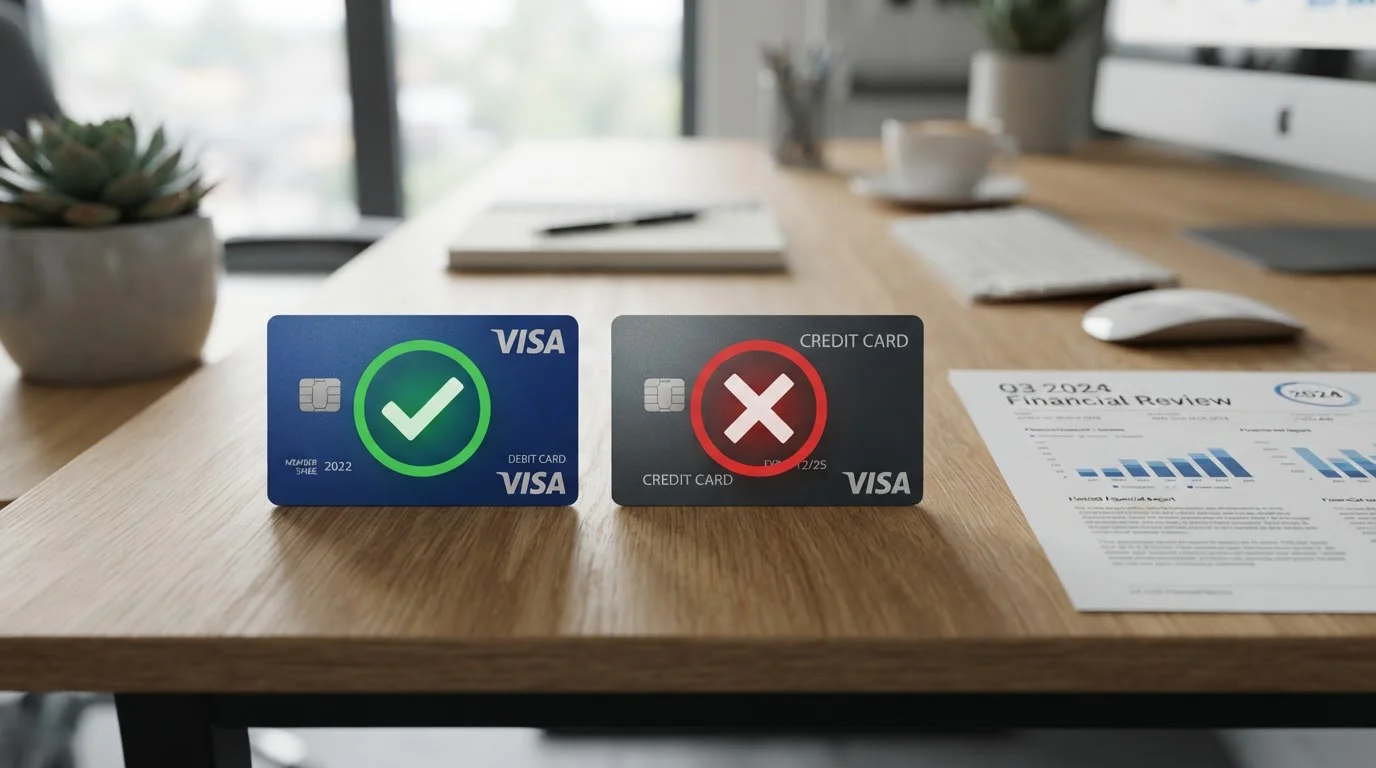
What’s the difference between using Visa debit and Visa credit at online casinos?
Visa debit cards pull funds directly from your linked bank account. Visa credit cards borrow against a credit line. For online gambling in Australia, the distinction became legally binding in mid-2024 when federal law prohibited using credit cards for any gambling transaction—online casino deposits, sports betting, racing wagers, land-based casino play, lottery tickets, all of it. The ban applies nationwide. Credit cards issued by Australian banks or used by Australian residents cannot legally process gambling payments, and processors block them at the transaction level. Debit cards were specifically exempted and remain legal for gambling.
The policy intent was harm reduction—preventing players from accumulating gambling debt on high-interest credit lines. Before the ban, players could deposit $5,000 on a credit card, lose it, and carry the balance at 18–22% annual interest while chasing losses with more borrowed money. The 2024 law shut that loop. If you try to use a Visa credit card at an offshore casino in 2026, the transaction will decline even if the casino’s cashier lists Visa as an option. The block happens at the issuer or processor level, not the casino level.
Visa debit works because it’s your own money, not borrowed funds. The legal and ethical distinction is straightforward: debit cards enforce a natural spending limit (you can only deposit what’s in your account), while credit cards enabled unlimited deposits constrained only by credit limits. Offshore casinos adjusted their cashier systems in 2024 to reject credit cards from Australian accounts, but debit cards still process normally. If your Visa card is a debit card—check the label on the front, it will say “Debit” rather than “Credit”—you’re unaffected by the ban.
Why Visa Credit Cards No Longer Work
The mechanics: when you submit a Visa credit card for a casino deposit, the processor sends an authorization request to your card issuer along with the merchant category code (MCC 7995 for gambling). Australian card issuers check the card type. If it’s a credit card, the transaction is auto-declined by policy, regardless of available credit. If it’s a debit card, the transaction proceeds through the normal approval flow (checking available funds, fraud rules, offshore-merchant policies). The casino never sees the difference—your card just declines, and the cashier displays a generic error message.
Some players tried workarounds—prepaid Visa cards, Visa gift cards purchased with cash, cards issued by non-Australian banks. Prepaid cards mostly failed because processors treat them as credit instruments (they extend a balance without a linked bank account). Foreign-issued cards worked temporarily but issuers tightened restrictions as the ban took effect globally (many international banks adopted similar gambling-credit-card bans around the same time). By 2026, the workarounds are rare and unreliable. The effective rule is: Visa debit works, Visa credit doesn’t, and trying to bypass the ban with exotic card products wastes more time than switching to a debit card or an alternative payment method.
Visa Debit Cards Still Accepted
Every casino in this comparison accepts Visa debit cards as of September 2026. The ban did not affect debit-card gambling, and no further restrictions are anticipated. If you hold a Visa debit card issued by an Australian bank—Commonwealth Bank, NAB, Westpac, ANZ, Bendigo, Bank of Melbourne, any of them—you can deposit at Lucky Elf, Winz, Ripper, Fair Go, and the rest without legal or processor-level blocks (subject to your issuer’s fraud policies and offshore-transaction settings, which vary by bank and are unrelated to the credit card ban).
Practically, this means your existing Visa debit card continues to work the same way it did before mid-2024. The deposit process hasn’t changed. The only difference is that credit cards—once a common deposit method—vanished from the available options overnight. If you’ve been using Visa debit all along, you didn’t notice the ban. If you were using Visa credit, you switched to debit, bank transfer, or crypto in 2024 and that’s still the arrangement in 2026.
Why Your Visa Deposit Might Get Declined (and How to Fix It)
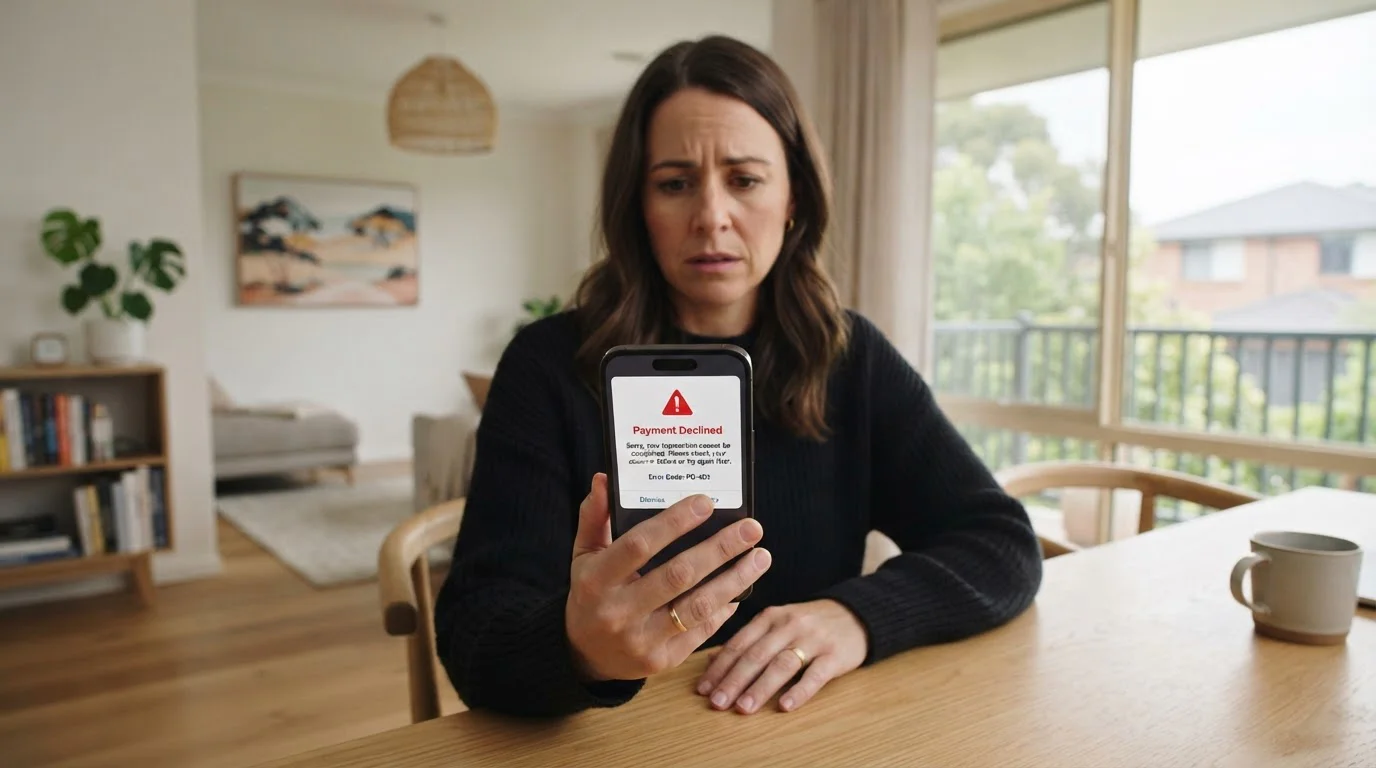
Why was my Visa casino deposit declined?
A declined Visa deposit doesn’t automatically mean the casino is dodgy or your card is broken. Declines happen for a dozen reasons, most of them sitting between your card issuer and the casino’s payment processor rather than at either endpoint. The most common causes: your bank blocks offshore gambling merchants by policy, the processor flags your transaction as high-risk, you’ve hit a daily or weekly card limit, verification details don’t match, or there’s simply not enough money in your account. Fixing it depends on which reason applies.
Australian banks treat offshore gambling transactions with suspicion because MCC 7995 (the merchant category code for gambling) triggers fraud filters designed to protect you from unauthorized charges. Commonwealth Bank might approve offshore gambling debits by default while NAB blocks them unless you phone and whitelist the merchant. Westpac might allow one transaction through and block the next identical transaction three hours later because their fraud algorithm flagged repeated offshore payments. The bank isn’t wrong or right—it’s applying risk rules that vary by issuer.
Start by checking your account balance. Insufficient funds is the simplest cause and the easiest fix. If your balance is healthy, check your card’s daily transaction limit (often $1,000 to $5,000 for debit cards; you can raise it by calling your bank). If you’re within limits and your balance is fine, the block is likely issuer-side or processor-side. Try a different card from a different bank. If the second card works, the issue is your first bank’s offshore-merchant policy. If both cards fail, the issue is the casino’s processor—try a different casino or switch to bank transfer, Neosurf, or crypto.
Common Decline Reasons
Insufficient funds is self-explanatory—deposit amount exceeds your available balance. The fix is deposit less or transfer money into the account first. Daily or weekly card limits are common on debit cards—your bank caps your total spending per day (e.g., $2,000) or per week (e.g., $7,000) to limit fraud exposure. If you’ve already spent $1,800 today on groceries and bills, a $500 casino deposit will push you over the limit and decline. The fix is wait until tomorrow when the limit resets, or call your bank and request a temporary or permanent limit increase.
Verification mismatches happen when the name on your casino account doesn’t match the name on your card, or the billing address you entered in the cashier doesn’t match your bank’s records. Offshore processors run Address Verification System (AVS) checks—your card issuer sends back a code indicating whether the address matches. A mismatch triggers a decline. The fix is enter your address exactly as it appears on your bank statement, including apartment numbers, street abbreviations, and postcode. If you’ve moved recently and your casino account still has your old address, update it before depositing.
Fraud filters flag unusual patterns—first-time offshore transaction, large deposit after weeks of small ones, multiple rapid transactions in a short window, transactions from a new device or IP address. The block is temporary and intended to confirm you’re the one making the purchase, not someone who stole your card details. The fix is call your bank, confirm the transaction is legitimate, and ask them to whitelist the merchant or approve the specific payment. Some banks send an SMS or app notification when they block a transaction; reply “yes” to approve it and retry the deposit.
Bank Blocks and MCC 7995
Do Australian banks block Visa deposits to online casinos?
Some do, some don’t, and the same bank can behave differently for two customers depending on account type, transaction history, and internal risk scoring. The mechanism is MCC 7995, the merchant category code assigned to gambling transactions. When you submit a Visa deposit to an offshore casino, the processor tags the authorization request with MCC 7995. Your bank’s payment-processing system checks its internal policy: allow MCC 7995 transactions, block them, or flag them for review.
Commonwealth Bank’s default policy in 2026 leans permissive for offshore gambling—most Visa debit transactions go through without manual intervention. NAB is stricter—many customers report needing to call NAB to whitelist gambling merchants before a deposit succeeds. Westpac sits in the middle, approving some transactions and flagging others depending on amount and frequency. ANZ, Bendigo, and regional banks each have their own policies, not publicly documented and subject to change. The lack of transparency is frustrating but it’s deliberate—banks don’t publish their fraud rules because doing so would help actual fraudsters game the system.
If your bank blocks offshore gambling transactions by policy, your options are: switch to a different bank that’s more permissive (Commonwealth Bank is commonly cited as gambling-friendly), call your current bank and request they whitelist the specific merchant or category (some banks allow this, others refuse), or use an alternative payment method that bypasses MCC 7995 (bank transfer coded as a regular transfer, Neosurf vouchers, crypto). You cannot force your bank to approve a transaction it has blocked by policy. Retrying the same card five times just locks your card temporarily for suspicious activity.
Verification Issues
First-deposit verification is common and non-negotiable. Casinos operating under Curaçao licences are required by their licensing terms to verify player identity before processing withdrawals, and many extend that requirement to large deposits as well. You’ll receive an email asking for proof of identity (driver’s licence, passport) and proof of address (utility bill, bank statement, government letter dated within the last three months). Upload clear, full-colour photos or scans showing all four corners of the document. Blurry photos, cropped images, or black-and-white scans get rejected and slow the process.
Common verification mistakes: uploading a bank statement from six months ago (must be within 90 days), uploading only the front of your driver’s licence (they need both sides), covering your middle card digits with tape when photographing your Visa card for payment-method verification (casinos need to see the first six and last four digits to confirm it’s your card, but you should obscure the middle digits for security—they’ll tell you exactly what to show). If verification fails, the casino emails you with specific instructions. Read the email, fix the issue, resubmit. Most verifications clear within 24 hours once the documents are correct.
Card verification specifically requires a photo of your Visa card (front only, middle digits obscured with tape or paper, your name and last four digits visible) and sometimes a selfie of you holding the card next to your ID. This proves you physically possess the card and it’s not a stolen number typed into the cashier. It feels invasive but it’s standard anti-fraud and anti-money-laundering practice. If you’re uncomfortable photographing your card, use a different payment method that doesn’t require it—bank transfer, Neosurf, or crypto.
Pokies and Games at Visa Casinos
Game variety at Visa-accepting casinos in this comparison ranges from Fair Go’s RTG-focused library (smaller, classic pokies) to Lucky Elf’s 13,000+ titles (Pragmatic Play, NetEnt, Play’n GO, Yggdrasil, Hacksaw, Nolimit City, Push Gaming, Relax Gaming, ELK Studios, and 50+ others). Winz runs 7,000–8,000 games via SoftSwiss platform integration. Ripper sits around 4,000 games from 40+ providers. The secondary-tier casinos (Neospin, RickyCasino, Hell Spin, Need For Spin) each list 30–60 providers, which translates to roughly 2,000–5,000 games depending on how many titles each studio contributes.
Provider overlap is high. Pragmatic Play, Betsoft, NetEnt, and Play’n GO appear at nearly every casino. Hacksaw Gaming, Nolimit City, and Relax Gaming are common at the premium tier (Lucky Elf, Winz) and less common at the RTG-focused or secondary-tier options. Fair Go is the outlier with its RTG/SpinLogic focus—RealTime Gaming titles (Achilles, Asgard, Cash Bandits, Cleopatra’s Gold, Crystal Waters, Megasaur, Spirit of the Inca) that defined Australian offshore casinos in the 2010s. If you played at older Aussie-facing casinos like Joe Fortune or Red Stag, Fair Go’s library will feel familiar. If you’re used to modern Pragmatic Play or Hacksaw pokies, RTG games will feel dated in graphics and features.
Live dealer coverage comes via Evolution Gaming (the dominant provider), Ezugi, and Pragmatic Play Live at most casinos. Lucky Elf and Winz offer all three. Ripper and Fair Go lean on Ezugi and Vivo Gaming. Games include blackjack, roulette, baccarat, game shows (Crazy Time, Monopoly Live, Dream Catcher), and poker variants. Table limits vary—low-stakes tables start at $1–$5 minimum bets, high-roller tables run into the thousands per hand. Live dealer games require stable internet (4G or better, ideally home broadband) and don’t work well on dodgy public Wi-Fi.
Jackpot pokies—Mega Moolah, Divine Fortune, Major Millions, Hall of Gods—appear at casinos that licence Microgaming or NetEnt. RickyCasino lists Microgaming, so Mega Moolah is likely available there. Lucky Elf and Winz carry NetEnt, so Divine Fortune is accessible. Fair Go’s RTG library includes Megasaur and Spirit of the Inca (progressive jackpots that have paid six-figure wins to Australian players historically, though hit frequency is low and the jackpots reset to $10,000–$50,000 rather than the multi-million Mega Moolah seeds).
Is It Safe to Use Visa at Offshore Casinos?

Is it safe to use my Visa card at offshore casinos?
Visa itself is secure—chip-and-PIN technology, encryption, fraud monitoring, chargeback rights if a merchant debits you without authorization. The risk sits with the casino, not the card network. A reputable offshore casino uses SSL encryption (HTTPS padlock in the browser bar), stores card details in PCI-DSS-compliant systems, and processes payments through licensed processors (not fly-by-night payment gateways that store your card number in plaintext on a server in Moldova). A dodgy casino skips those safeguards, stores your card data insecurely, or sells it to third parties. The question isn’t “is Visa safe,” it’s “is this casino trustworthy.”
Check the casino’s licence. Every casino in this comparison operates under a Curaçao eGaming licence (or is likely Curaçao-licensed based on market positioning). Curaçao licences are the lowest tier of offshore gambling regulation—easier to obtain than Malta or UK licences, lighter on ongoing compliance checks, weaker consumer-protection mechanisms. But they’re still a baseline filter. A licensed casino has at least submitted to anti-money-laundering audits, disputes can be escalated to the Curaçao Gaming Control Board, and the licence can be revoked for serious violations. An unlicensed casino has none of that. If a casino doesn’t display a licence number and regulator name in the footer, walk away.
Check the casino’s reputation. Google the casino name plus “scam” or “refused to pay.” Read reviews on forums like AskGamblers, Casinomeister, or ThePogg (not affiliate sites that whitewash every operator to preserve commission income). Look for patterns: one player complaining about a declined withdrawal might be an edge case where they violated bonus terms, but fifty players complaining about the same issue over six months is a red flag. Lucky Elf and Winz (both Dama N.V.) have multi-year track records and thousands of reviews—not perfect, but broadly positive. Fair Go and Ripper (both Deckmedia N.V.) have operated since 2017 and 2021 respectively, with established reputations in Australian circles. The secondary-tier casinos have sparser review trails; proceed cautiously.
The Legal Position for Australian Players
The Interactive Gambling Act 2001 (IGA) prohibits operators from offering online casino services (pokies, table games, live dealer) to Australian residents. The law targets the *supply side*—casinos advertising into Australia, accepting Australian sign-ups, processing Australian payments—not the *demand side*. There is no provision in Australian federal law that makes it illegal for an individual player to use an offshore casino. You will not be prosecuted for signing up at Lucky Elf, depositing with Visa, and playing pokies.
The legal grey area creates a consumer-protection vacuum. If you deposit $1,000 at an offshore casino, win $5,000, and the casino refuses to pay citing a vague bonus-term violation, you cannot escalate the dispute to an Australian regulator or court. You can file a complaint with the Curaçao Gaming Control Board (if the casino is Curaçao-licensed), but Curaçao’s enforcement is slow and inconsistent. You can post on forums and damage the casino’s reputation, which sometimes prompts resolution. But you have no legal recourse in Australian courts because the IGA classifies the transaction as illegal on the supply side. Australian consumer law doesn’t cover transactions the law prohibits in the first place.
This is why reputation matters. A casino that has operated for five years, paid thousands of Australian players, and maintained a licence isn’t bulletproof, but it has an incentive to preserve its reputation. A casino that launched last month, has no reviews, and hides its licence details has no reputation to lose. Use the established operators. Check reviews. Read the terms before depositing. Set deposit limits. Treat offshore gambling as entertainment spending, not investment. The risk isn’t Visa card fraud (your bank’s fraud protection covers that); the risk is depositing at a casino that refuses to pay your winnings and facing no effective remedy.
Encryption and Payment Security
Every casino in this comparison uses HTTPS encryption—you’ll see the padlock icon in your browser’s address bar when you load the casino’s site. HTTPS encrypts data between your device and the casino’s server, preventing man-in-the-middle attacks where someone intercepts your card number as it travels across the internet. If a casino’s URL starts with HTTP (no S), do not enter your card details. HTTPS is table-stakes security in 2026; any casino still using unencrypted HTTP is either incompetent or malicious.
Payment Card Industry Data Security Standard (PCI-DSS) compliance is the global standard for storing and processing card data. Compliant systems tokenize your card number (replacing it with a random identifier that’s useless if stolen), encrypt card details at rest, and restrict access to payment data to a small number of authorized personnel. Most offshore casinos don’t handle card data directly—they integrate a third-party payment processor (e.g., a gateway like Praxis, Payop, or similar) that is PCI-DSS compliant and handles the card details, passing only a transaction-approved or transaction-declined message back to the casino. This limits the casino’s exposure and yours.
Two-factor authentication (2FA) is available at some casinos (Lucky Elf and Winz both support it) and adds a second login step—enter your password, then enter a code sent to your phone or generated by an authenticator app. Enable it if the casino offers it. 2FA protects your account if your password leaks in a data breach elsewhere (many people reuse passwords across sites, a bad habit that 2FA mitigates). If 2FA isn’t available, use a unique strong password and consider a password manager to generate and store it.
Choosing a Trustworthy Casino
Licence visible in the footer. Click the licence logo or number—it should link to the regulator’s site where you can verify the licence is active. Operator name stated somewhere on the site (usually in the footer or Terms and Conditions)—Dama N.V., Deckmedia N.V., or whichever legal entity runs the casino. Reviews from multiple sources (not just one affiliate site). Clear bonus terms and withdrawal rules—maximum cashout stated upfront, wagering requirements visible, no hidden clauses that only appear after you deposit. Responsive support—test the live chat before depositing, ask a simple question about withdrawal times or Visa limits, gauge the response quality.
Red flags: no licence displayed, no operator name, no physical address (even offshore casinos usually list a Curaçao or Malta address), bonus terms that are vague or contradictory, reviews filled with “refused to pay” complaints, support that doesn’t respond or gives evasive answers, payment methods that include sketchy options (Western Union, anonymous vouchers that smell like money laundering). If two or more red flags appear, use a different casino. There are enough legitimate offshore options that you don’t need to risk a dodgy one.
Fair Go, Ripper, Lucky Elf, and Winz all clear the trustworthy-casino checklist. Long operational history (Fair Go since 2017, Winz since 2020, Lucky Elf since 2022), established operators (Deckmedia N.V., Dama N.V.), visible Curaçao licences, thousands of reviews, responsive support, clear terms. Neospin, RickyCasino, Hell Spin, Need For Spin, Rolling Slots, and Casino Rocket have sparser public data; check reviews before depositing and start with a small amount to test the cashier and withdrawal process before committing larger sums.
Casino Deposit Methods Australia 2026 — Compared
Content created by the «Bankroll» team