
$10 PayID no deposit bonus in Australia: the honest numbers behind the offer
 Available in AU

Two things get welded together in that search box, and they do not belong to each other. A no deposit bonus means the casino pays first. A $10 PayID deposit means you pay first, using Australia’s instant bank rail, at the lowest threshold an operator will tolerate. Both exist. Both are findable in 2026. Neither one is the other, and the offer that would combine them into a single tidy product does not exist anywhere in the offshore market serving Australian players.
That matters because the gap between what people expect and what operators deliver is where the money goes. Somebody types the phrase, lands on a page promising a “free” tenner, signs up, discovers a sixty-times playthrough attached to it, and quietly writes the whole category off as a scam. It is not a scam. It is arithmetic, disclosed in clause fourteen, working exactly as designed.
The $10 PayID No Deposit Paradox: What You Are Actually Searching For
Search behaviour in this niche is messy for a good reason. Australians have no domestic online casino market to compare against. There is no local licensing register to sanity-check a claim, no state regulator publishing approved operator lists for pokies played on a phone. So the vocabulary players use comes from affiliate marketing rather than from product documentation, and affiliate marketing has a commercial interest in blurring the line between “we will give you ten dollars” and “you can start with ten dollars.”
The two offers sit at opposite ends of the risk ledger. One is a customer-acquisition expense the operator absorbs up front, hedged with conditions so tight that the expected cost per signup lands in the low single digits. The other is a payments decision: whether the processing fee on a $10 transfer leaves enough margin to bother accepting it. Different departments, different maths, different fine print.
Why “No Deposit” and “$10 PayID Deposit” Are Two Different Products
A no deposit bonus is credited on registration or on entry of a promotional code. No payment method touches it. You do not need PayID, a card, a voucher, or a wallet to receive one, because nothing is being paid. The casino books the credit as marketing spend and attaches the terms that make the spend survivable: a playthrough multiplier, a maximum bet ceiling while bonus funds are live, a game weighting table that pushes you onto pokies and blocks the low-edge tables, and a cashout cap that truncates any outlier win.
A $10 PayID deposit is a funding event. Real money leaves your bank account, arrives at a payment intermediary, and appears as a balance you own outright. No playthrough applies to your own cash unless you have also claimed a deposit bonus on top of it. Withdraw it untouched five minutes later and, subject to identity checks, it is yours.
Where PayID genuinely intersects with a no deposit bonus is at the far end, not the near one. Suppose you beat the odds, clear the playthrough, and have something withdrawable. The operator now needs to send money to an Australian bank account, and the identity attached to that account has to match the account holder on file. PayID becomes the verification and payout surface at that point. It grants you nothing on the way in.
What the Search Term Really Means and Why It Keeps Confusing People
Strip the phrase down and you get three separate questions wearing one coat. Which casinos serving Australia hand out a $10 credit for signing up. Which casinos accept a $10 PayID deposit rather than demanding $20 or $30. And whether the bonus attached to that $10 deposit actually triggers at $10, or quietly requires more.
The third question is the one that catches people, and it is the reason a page listing “best $10 casinos” can be technically accurate and practically useless. An operator can advertise a $10 minimum, process your $10 without complaint, and still leave you with exactly $10 to play with because the welcome offer needs $20 to fire. No rule was broken. The cashier did what it said. You simply read the marketing headline as a promise about the bonus when it was a statement about the payment.
What is the difference between a $10 no deposit bonus and a $10 deposit bonus?
A no deposit bonus credits $10 to your account for registering, with no payment from you, and carries heavy playthrough plus a cashout cap. A $10 deposit bonus requires you to transfer $10 of your own money first, after which the casino adds matching bonus funds on top. One costs nothing, the other doubles your starting balance.
Offshore Casinos and Australian Law: What “Legal” Actually Covers

Every operator named further down this page is based outside Australia and licensed outside Australia. That is not a red flag anyone is hiding. It is the structural consequence of the Interactive Gambling Act 2001, which makes it an offence to provide online casino-style gambling services to a person physically present in Australia. Pokies, roulette, blackjack, baccarat, video poker: all prohibited as online products supplied into this market. Sports betting and racing wagering went a different way and are licensed domestically, which is why an Australian can legally back a horse on a phone app but cannot legally be served an online pokie by an Australian company.
The Act points at suppliers. It does not create an offence for the individual placing the bet. That distinction is the whole reason this market exists in the shape it does: enforcement lands on operators, payment channels, and domain names, not on the person holding the phone. The Australian Communications and Media Authority administers the blocking regime, refers offshore operators to overseas regulators, and instructs internet providers to cut off access to sites it finds in breach. Hundreds of domains have gone dark that way.
What that produces, in practice, is not legal jeopardy for players. It is friction. Card deposits decline for no stated reason. A site that loaded yesterday returns a provider error today. A withdrawal request sits in a queue while an offshore compliance team decides whether your documents are adequate. None of that is theoretical, and all of it matters far more to your actual experience than the word “legal” does.
The second consequence is the one worth sitting with. An operator licensed in Curaçao or Anjouan is not accountable to any Australian body. If a bonus term is applied in a way you consider unfair, there is no local ombudsman, no state gambling authority to complain to, no tribunal with jurisdiction over the operator. Your recourse runs through the licensing jurisdiction’s own dispute process, which in the case of Curaçao has historically been thin. The practical protection available to you is the operator’s reluctance to acquire a reputation for stiffing players, which is real but not enforceable.
Dispute leverage is also the reason a licence number matters more than a licence badge. A footer graphic proves nothing. A sublicence number that resolves on the issuing register proves the entity exists and is currently in good standing. Among the operators covered here, that check succeeds cleanly on some and produces nothing on others, which is itself information.
Are offshore casinos offering $10 PayID deposits legal for Australian players?
The Interactive Gambling Act 2001 prohibits operators from supplying online casino games into Australia, not players from using them. No Australian has been prosecuted for playing. What you face instead is unregulated operators, blocked domains, declined bank transactions, and no local dispute authority if a bonus term is applied against you.
$10 No Deposit Bonuses in Australia: Which Casinos Actually Offer Them
Here is the number nobody leads with: the population of operators serving Australia with a genuine, repeatable no deposit credit in the $10 range is small. Not ten. Not the twenty a rankings page will list by padding the set with deposit offers relabelled as free ones. Three names carry this category with any consistency, and all three run on the same software platform, which tells you something about where the product sits commercially.
RealTime Gaming has been the engine behind Australian-facing free chip marketing for the better part of a decade. The platform supports the mechanics that make the offer survivable for an operator: granular bonus wallets separated from cash balances, per-spin bet ceilings enforced at the server, game weighting tables, and forfeiture triggers that fire automatically when a rule is breached. Newer platforms can do most of this too. They mostly choose not to bother, because deposit matching converts better.
| Operator | Bonus form | How to claim | Playthrough | Max cashout | Eligible games |
|---|---|---|---|---|---|
| Fair Go Casino | Free chip, $5–$20 depending on code | Rotating promo code entered in cashier | 60x on bonus plus winnings | $100–$150 | Pokies; tables excluded from turnover |
| Heaps O Wins | Free chip, $10–$20 | Rotating promo code, heavy affiliate distribution | 60x on bonus plus winnings | $100 hard cap | Pokies only |
| Uptown Pokies | Free chip or free spins, seasonal | Code when a promotion is running | 40x–60x depending on offer | Capped per offer terms | Pokies; specified titles on spins |
The codes themselves rotate, which is deliberate. A code printed on a page in March is dead by June, and any source quoting one as though it were permanent is quoting a screenshot. Check the cashier or the promotions panel inside the account. That is the only current record.
Fair Go Casino: The Free Chip Veteran
Fair Go has been aimed squarely at this market since around 2017, operating under Deckmedia N.V. with a Curaçao licence and running exclusively on RealTime Gaming software. The branding is unsubtle in a way that clearly works, the interface has the slightly stiff feel of a platform designed before phones won, and the game library sits in the low hundreds rather than the thousands. What it has instead is continuity. The same operator, the same rails, the same terms, for years. In a category where brands appear and evaporate inside eighteen months, that is not nothing.
The no deposit product here is the most reliable in the Australian market, which is a statement about availability rather than generosity. Free chips land in the $5 to $20 band depending on the code, and the playthrough runs at sixty times the bonus plus any winnings from it. Take a $10 chip, win $40 with it, and your turnover obligation is calculated on $50, not on $10. That construction is common on free chips and it is the single most misread clause in the category. Cashout from a no deposit chip tops out around $100 to $150. Hit something enormous and the excess is removed at the withdrawal stage, exactly as the terms say it will be.
Identity verification at Fair Go is thorough and slow. Expect to supply photo identification, a utility bill for address, and in some cases bank statements, with processing on a first withdrawal commonly running three to seven days. Complaints about the operator cluster around that wait rather than around non-payment, which is the better of the two problems to have. Deposits accept $10 via PayID. Withdrawals do not return by the same route, which is a structural issue covered further down rather than a Fair Go quirk.
Heaps O Wins: Generous Headline, Brutal Ceiling
Heaps O Wins does volume. Its free chip codes circulate through more Australian affiliate channels than any competitor’s, the site itself is a loud stack of promotional panels, and the headline amounts on offer sit at the top of the category at $10 to $20. Another RealTime Gaming build, another Curaçao licence, though the operating entity is considerably less visible in the site’s own documentation than Deckmedia is on Fair Go. That opacity is worth registering before you send anything more than bonus funds through it.
The ceiling is where this one earns its reputation. Maximum cashout from a no deposit chip is $100, applied without discretion. Land a five-figure progressive using bonus money and $100 is what leaves the building; the remainder is removed when the withdrawal is assessed. Read that as the operator pricing its marketing exposure rather than as a trap, because it is disclosed, but read it before you build any expectations on a jackpot screenshot. Playthrough matches Fair Go at sixty times bonus plus winnings, and the bet ceiling while bonus funds are active is enforced by the platform rather than policed by humans. Exceed it by a cent on one spin and the automated check voids the balance.
For what it is, the offer has a legitimate use: a no-cost look at how RealTime Gaming pokies behave, how this cashier is laid out, and how support responds, before any of your own money is involved. Treat it as a test drive with the odometer disconnected and you will not be disappointed.
Uptown Pokies: The Sibling With Seasonal Offers
Uptown Pokies shares its parent with Fair Go. Same Deckmedia N.V., same Curaçao licensing, same RealTime Gaming library, a slightly cleaner interface, and progressive jackpot titles given more prominence. Where it diverges is promotional strategy. Standing no deposit offers are not the model here. Free chips and free spin batches appear seasonally, tied to campaigns rather than sitting permanently in the promotions panel, so whether this operator belongs in your shortlist depends entirely on the week you are looking.
The deposit side is where Uptown Pokies is more consistently relevant, and it is covered in its own breakdown below. On the bonus side, the term that deserves attention is the withdrawal hold. Requests sit for up to forty-eight hours before processing begins, framed as a cooling-off window and functioning as one. If you have just cleared a playthrough and want your money, two days of watching a pending status is the experience on offer. Players who dislike it are not wrong to; it is also the kind of clause that exists because reversal requests were costing the operator money.
Can I really get a $10 bonus without depositing anything at an Australian casino?
Yes, and three operators offer it with any regularity: Fair Go, Heaps O Wins, and Uptown Pokies seasonally. The credit is real. What is attached to it is sixty times playthrough on bonus plus winnings and a cashout capped near $100, which is what makes converting it to withdrawable cash so difficult.
The Real Cost of a No Deposit Bonus: Playthrough, Caps and Expected Value

This is where the category gets honest, and where most coverage stops at quoting a multiplier without translating it into anything a person can act on. A sixty-times requirement is not a difficulty setting. It is a turnover obligation with a known cost, and the cost can be calculated from figures the operator publishes.
How Playthrough Works, and Why Sixty Times Is a Wall
The multiplier applies to turnover, not to balance. Sixty times a $10 chip means $600 of bets must be placed before any withdrawal is permitted. The same ten dollars can be wagered and re-won repeatedly; each bet counts toward the total regardless of whether it wins or loses. On fifty-cent spins that is twelve hundred spins, somewhere in the region of four hours of continuous play at a normal pace.
Now price it. Pokies eligible for bonus turnover run at a return to player figure in the mid-nineties; call it 95 per cent, which is a fair mid-range number for the RealTime Gaming titles these offers point you at. The house keeps five per cent of every dollar cycled. Five per cent of $600 is $30.
Read that number against your starting balance. The mathematics expects the house to extract $30 across the required turnover, and there is $10 in the account to extract it from. The obligation is three times larger than the resource available to satisfy it. Clearing it therefore requires running meaningfully above expectation for the entire grind, which happens to some players on high-variance titles and does not happen to most. Nothing here is rigged. The design simply prices the free chip so that its expected cost to the operator is a fraction of its headline value.
Where the bonus plus winnings construction bites is on the upside. Win big early and your obligation grows with your balance. A $10 chip that becomes $400 on a lucky feature now carries turnover calculated on $410 at sixty times, which is $24,600. The good outcome made the exit harder. That is not an accident either.
Maximum Cashout: The Ceiling Above the Wall
Suppose the improbable happens and you clear it. The cashout cap decides what you keep. At $100, a cleared $10 chip that somehow turned into $800 pays $100 and the remaining $700 is removed at assessment. The cap is the operator’s stop-loss on the promotion and it is applied consistently, not selectively.
Stack the two clauses and the shape of the product becomes clear. Playthrough makes reaching a withdrawal unlikely. The cap makes the payoff for reaching it modest. The expected value of a no deposit chip, computed honestly, sits close to zero, which is precisely why operators can afford to hand them to strangers. A casino is not a charity, and nobody in this industry gives away money they have not already priced.
None of which makes claiming one irrational. Free entertainment is worth something, and a no-cost look inside a cashier before funding it is genuinely useful reconnaissance. Expecting rent money is the error, not claiming the chip.
Worked Example: A $10 Chip Against a $10 Deposit
Set the two products side by side on the same starting capital. A $10 free chip at sixty times requires $600 turnover, expected house take $30, cashout capped at $100. A $10 PayID deposit at an operator whose match triggers at $10 gives you $20 of playable balance, and where the playthrough is calculated at thirty-five times bonus only, the obligation is $350. Expected house take across that turnover, at the same 95 per cent, is $17.50. No cashout cap applies to winnings from your own deposited funds.
Half the turnover obligation. No ceiling on the upside. The cost is that you had to put in ten real dollars. For anyone who was going to deposit eventually, the deposit-triggered offer is the better instrument by a wide margin, and it is not close.
What are wagering requirements, and can I withdraw winnings from a $10 no deposit bonus?
Wagering requirements multiply the bonus by a figure, usually sixty on free chips, to set the total bets needed before withdrawal. A $10 chip means $600 of turnover. Withdrawal is possible but uncommon, because the house edge across that turnover exceeds your starting balance several times over.
$10 PayID Deposits: Which Casinos Accept Them, and Which Reward Them
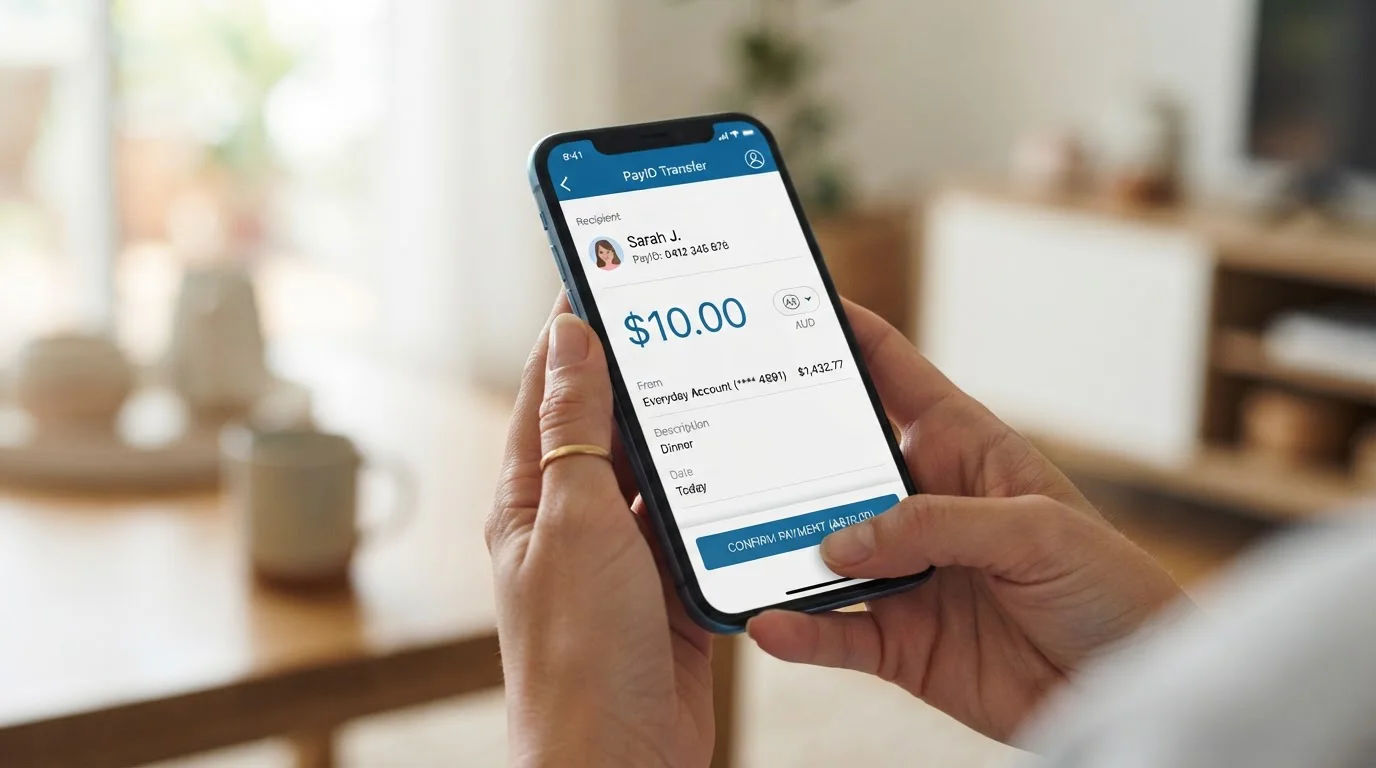
Two separate thresholds live in every cashier, and conflating them is the most expensive reading error in this whole category. The minimum deposit is the smallest amount the payment system will process. The bonus trigger is the smallest amount that activates the welcome offer. Operators advertise the first number and disclose the second in the terms, because the first one is a better headline.
Testing across the Australian-facing market through early 2026 found the split is the norm rather than the exception. Plenty of operators will take $10 through PayID without complaint and leave the welcome package locked until $20 or $30 arrives. A smaller group fires the bonus at $10 exactly. That second group is short, and it is where a $10 budget should go.
| Operator | Genuine PayID minimum | Bonus triggers at | Playthrough | PayID payout speed | Platform |
|---|---|---|---|---|---|
| NeoSpin | $10 | $10 | 50x bonus | Around 22 minutes on verified accounts | SoftSwiss |
| LuckyDreams | $10 | $10 | 35x bonus | Around 38 minutes | SoftSwiss and BGaming mix |
| Fair Go Casino | $10 | $20 | 60x deposit plus bonus | Not offered; bank transfer or crypto out | RealTime Gaming |
| Uptown Pokies | $10 | $20 | 40x deposit plus bonus | Not offered; bank transfer or crypto out | RealTime Gaming |
| Ricky Casino | $10 via proxy | $30 | 50x bonus | One to three business days | SoftSwiss |
Row order is deliberate: relevance to a $10 budget, best first. The two operators at the top are the only ones on this list where ten dollars buys both entry and the promotion.
NeoSpin: Genuine $10 Minimum With a $10 Trigger
NeoSpin runs on SoftSwiss and displays a Curaçao eGaming sublicence, 8048/JAZ2020-013, which resolves on the issuing register. That single detail separates it from most of the field, where footer badges link nowhere. The library is the largest of any operator serving this market at a $10 entry point, past seven thousand pokies drawn from more than seventy studios including Pragmatic Play, Hacksaw Gaming, Nolimit City, Play’n GO and Push Gaming. Deposits through PayID credit in under half a minute.
The welcome structure is where it earns the top row. The headline is 400 per cent up to $10,000 spread across the first nine deposits, and it fires at $10. Deposit ten dollars and forty dollars of bonus credit lands on top of it, which is the most aggressive ratio available at this threshold anywhere in the market. Then read the playthrough: fifty times the bonus. On $40 of bonus that is $2,000 of turnover, roughly four hours of fifty-cent spins, with the house expected to take $100 across it.
So the offer is simultaneously the best value and a serious grind, and both statements are true because the generosity is denominated in bonus funds rather than in cash. For a player who intends to play for hours anyway, the extra $40 of runway is straightforwardly good. For someone hoping to deposit $10, catch a feature and cash out by lunch, the bonus is an obstacle rather than a gift, and declining it is the smarter play. Withdrawals on verified accounts have measured around twenty-two minutes, which is quick by any standard and quicker than most operators manage on accounts ten times the size.
LuckyDreams: The $10 Trigger With Fairer Terms
LuckyDreams is the other operator where ten dollars unlocks the welcome offer, and it trades headline size for terms that are meaningfully easier to survive. The package is 100 per cent up to $1,000 plus a hundred spins on Big Bass Splash, and the playthrough is thirty-five times bonus. On a $10 deposit that means $10 of bonus and $350 of turnover.
Put the two $10 triggers side by side and the choice stops being about which number is bigger. NeoSpin hands you four times the bonus and asks for $2,000 of turnover. LuckyDreams hands you one times the bonus and asks for $350. Expected house take across the obligation is around $100 in the first case and around $17.50 in the second. If the goal is extended play on a small budget, NeoSpin wins. If the goal is a realistic shot at withdrawing something, LuckyDreams is the better instrument by a distance, and the hundred spins are a cleaner path to a modest win than a four-hour grind.
The library runs past five thousand titles with strong representation from BGaming and the SoftSwiss studio stable, and crypto support is broader than most, which matters as a fallback when an Australian bank decides your PayID transfer looks like gambling. PayID payouts measure slower than NeoSpin at around thirty-eight minutes. Still same-day, still unremarkable in a market where multi-day waits are normal.
Ricky Casino: Takes Your $10, Ignores It
Ricky Casino is a competent, modern SoftSwiss operation with more than six thousand titles from sixty-odd studios, a welcome package running to $7,500 and 550 spins across ten deposits, and crypto withdrawals that land inside an hour. It is also the clearest example in this market of an operator that accepts a $10 deposit and gives you nothing for it.
The bonus trigger sits at $30. Deposit ten dollars through a PayID proxy and the promotional engine does not notice you; the balance is simply ten dollars. Minimum withdrawal is $30, which means a $10 deposit that grows to $25 cannot leave the account at all until it grows further. PayID payouts run one to three business days, an order of magnitude slower than the top two rows, though crypto out is fast if you hold any.
None of this is a defect. It is positioning. Ricky is built for players depositing $30 and up, and it tolerates micro-deposits rather than courting them. Worth knowing before you fund it with a tenner and wonder where the 500 per cent went.
Fair Go Casino: $10 In, But the Bonus Wants Twenty
Fair Go accepts $10 through PayID and has done consistently, which is why it appears on nearly every list of low-threshold Australian-facing operators. The welcome structure is a different story: 100 per cent up to $200 per deposit across five deposits, triggering at $20, with playthrough calculated on deposit plus bonus at sixty times. Fund with $10 and you have $10 of cash and no promotion.
Which makes Fair Go an odd fit for a pure $10 deposit and a reasonable fit for a $10 budget deployed differently. Claim the free chip first, spend nothing, and see whether the platform suits you. If it does, the $20 threshold is where the deposit side becomes worth engaging. The other consideration is the exit: withdrawals here leave by bank transfer or crypto, not back down the PayID rail, and first cashouts run three to seven days behind identity checks. Fine if you are settling in. Irritating if you wanted the money by Friday.
Uptown Pokies: Same Story, Different Hold
Uptown Pokies mirrors its sibling on thresholds. Ten dollars through PayID is accepted, the welcome offer waits for $20, and the headline on that offer is 250 per cent up to $2,000 plus fifty spins on the first of six deposits, with playthrough at forty times deposit plus bonus. Forty times is materially better than Fair Go’s sixty on the same structure, so between the two Deckmedia properties this is the stronger deposit proposition once you are past the trigger.
The friction is the forty-eight hour withdrawal hold, which applies regardless of account size or how long you have been a customer. Clear your turnover, request your money, wait two days before processing even starts. Progressive jackpot titles get real prominence in the library and the RealTime Gaming catalogue is identical to Fair Go’s, so the choice between the two comes down to which set of terms annoys you less: sixty times playthrough, or a two-day pause on every exit.
Why do some casinos accept $10 PayID deposits but require $20 or $30 for the bonus?
Because the two thresholds serve different departments. The deposit minimum is a payments decision about processing costs. The bonus trigger is a marketing decision about acquisition spend. Advertising the lower number attracts traffic; setting the trigger higher protects the promotional budget. Both numbers are disclosed, just not with equal prominence.
How PayID Works for Casino Deposits, and Why Getting Money Out Is Harder
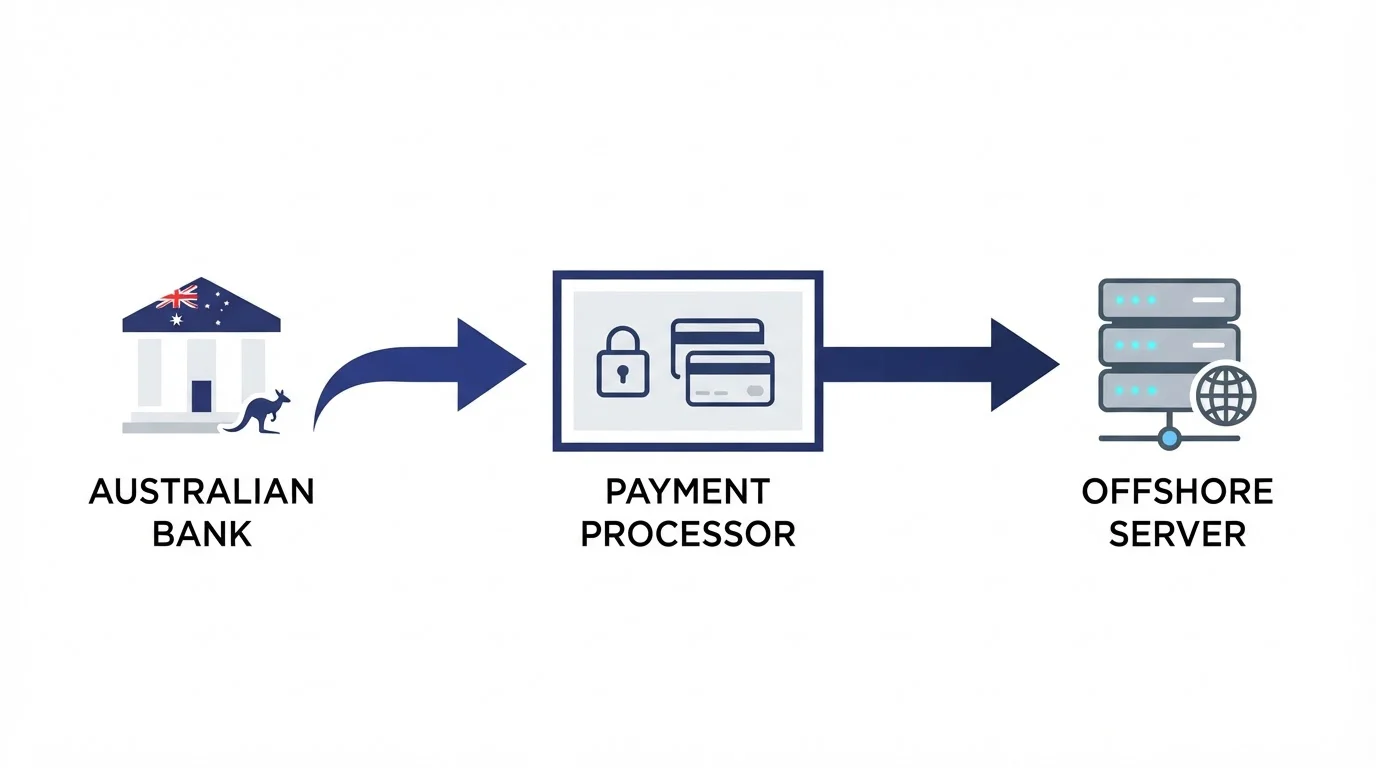
The asymmetry every player notices, and almost nobody explains, is structural. Deposits through PayID land in seconds. Withdrawals take hours or days and usually arrive by a different method entirely. That is not operators being difficult. It is what the payment rail was built to do.
PayID, the New Payments Platform and Osko
PayID is not a bank, a wallet, or an app. It is an addressing layer sitting on top of Australia’s New Payments Platform, the real-time clearing infrastructure that went live in February 2018 and now connects more than a hundred financial institutions. Osko is the consumer-facing brand for payments moving across it. PayID’s contribution is the alias: instead of quoting a BSB and account number, you register a mobile number, an email address or an ABN, and the platform resolves that identifier to the underlying account at the moment of transfer.
The infrastructure is substantial. The platform clears in the order of seven billion dollars a day across ordinary Australian payments, settling between accounts in seconds rather than in overnight batches. When you send ten dollars to a casino’s PayID identifier, that ten dollars moves on the same rail your rent does.
Why Deposits Are Instant and Withdrawals Are Not
Two reasons, and the first one is design. The platform is built for push payments: the person holding the money initiates the transfer. There is no mechanism for a merchant to reach into your account and pull funds, which is exactly the safety property that makes the system trustworthy. It also means the route cannot simply run backwards. An operator wanting to pay you needs a separate outbound arrangement, and that arrangement is usually a bank transfer, a card refund where one applies, or cryptocurrency.
The second reason is who actually receives your deposit. Offshore casinos do not hold corporate accounts with Australian banks; the Interactive Gambling Act makes domestic institutions extremely reluctant to knowingly process for unlicensed gambling entities. So operators route through local third-party payment aggregators registered as generic e-commerce or digital-goods merchants. Your bank’s monitoring sees a transfer to a domestic account, not a transaction carrying the 7995 gambling merchant category code. The aggregator takes the money, deducts a processing fee, and fires an API call telling the casino platform to credit your balance.
That intermediary is happy to collect inbound payments and poorly equipped to send outbound ones. Paying you would mean handling anti-money-laundering obligations on funds leaving an offshore gambling operator toward an Australian individual, which is a different compliance exercise with different risk. Most aggregators decline it. Hence the pattern: PayID in, something else out.
Know what that means for your decisions. If a fast exit matters, the operators worth shortlisting are the ones with a genuinely fast outbound method, and in this market that is usually cryptocurrency rather than any bank rail. The two SoftSwiss operators at the top of the table clear PayID-adjacent withdrawals in twenty to forty minutes precisely because their outbound processing is automated for small verified accounts. The RealTime Gaming properties do not offer a PayID exit at all.
Payment Aggregators and the Offshore Routing Layer
Worth naming the practical side effects of that hidden layer, because players hit them without knowing why. Deposits occasionally fail with no useful error, which is usually the aggregator’s account being rotated after a bank flagged it. Bank statements show an unfamiliar merchant name rather than the casino, which is the aggregator’s registered trading name. And Australian banks have tightened monitoring on transfers to identifiers associated with gambling flows through 2025 and into 2026, so a transfer that worked last month can be held for review this month.
Fees usually sit inside the aggregator’s margin rather than appearing as a line item, which is why a $10 deposit credits as $10. It also explains why some operators refuse deposits that small: on a ten-dollar transfer, a few per cent of processing cost against the expected value of the customer is a thinner calculation than it looks.
How does PayID work for $10 casino deposits in Australia?
You register a mobile number or email as your PayID with your bank, then send the amount to the casino’s PayID identifier from your banking app. The transfer clears in seconds on the New Payments Platform, and the casino credits your balance once its payment processor confirms receipt. Usually under a minute.
Claiming and Clearing a $10 Bonus Without Voiding It
Most forfeited bonuses are not forfeited by bad luck. They are forfeited by a rule the player did not know was being enforced by the platform rather than by a person.
Claiming: Codes, Timing and the Order of Operations
Two mechanisms credit a no deposit bonus. Automatic crediting on registration, which is rare and getting rarer, and promo code entry, which is standard. The code goes in either during signup or afterwards in the cashier or promotions panel, depending on the operator. Miss it and there is no retroactive fix. Once an account has been funded or played, the offer that needed a code at registration is gone.
Order of operations matters more than people expect. Claiming a no deposit chip after you have deposited will often disqualify you from it, because the terms restrict it to unfunded accounts. If you intend to use both a free chip and a deposit offer at the same operator, the chip goes first, gets resolved, and only then does money go in.
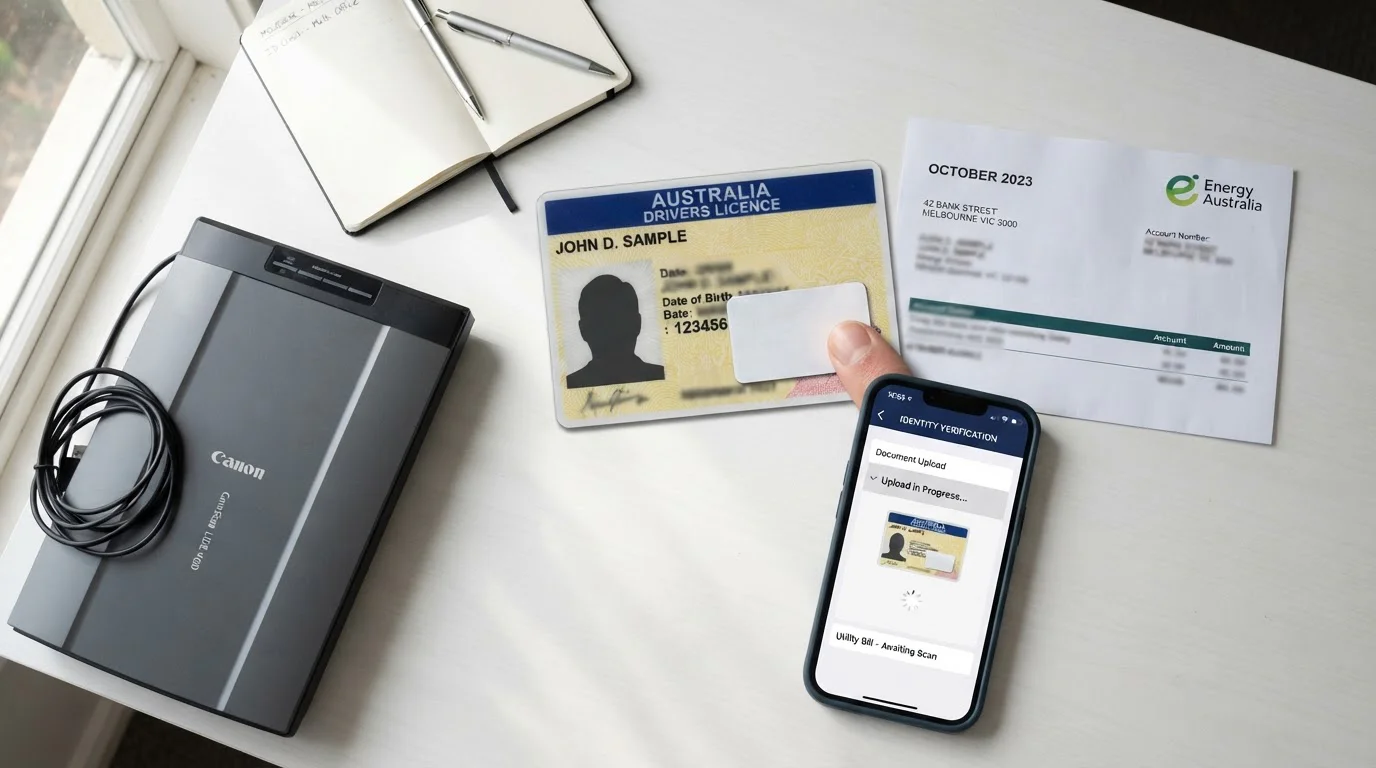
Identity verification sits in front of everything eventually. Offshore operators are obliged under their own licensing to verify age and identity, and eighteen is the floor in this market. Some verify at signup; most defer it to the first withdrawal request, which is the worst possible timing from a player’s perspective because it arrives exactly when you want the money. Uploading documents on day one rather than on cashout day is the single cheapest thing you can do to shorten your eventual wait.
Depositing $10 Through PayID
Register your PayID with your own bank first if you have not already. Mobile number or email, linked to the account you will use, done inside your banking app in a minute. Then in the casino cashier, select PayID, take the identifier and reference code it displays, and send exactly the amount shown from your banking app.
The reference code is the part people skip. It is how the aggregator matches an incoming transfer to your casino account, and a transfer arriving without it has to be reconciled manually, which turns thirty seconds into two days of support tickets. Send from an account in your own name, too. Transfers from a joint or third-party account are the most common cause of a deposit being held and, later, of a withdrawal being refused on a name mismatch.
Playing Through Without Tripping a Forfeiture
Three clauses void balances, and all three are enforced automatically. The maximum bet while bonus funds are live, typically in the five to ten dollar band, checked per spin at the server. Game eligibility, where pokies carry full weight and tables frequently carry none, so an hour of blackjack can add nothing whatsoever to your turnover. And bonus expiry, commonly seven days, after which unresolved balances vanish regardless of progress.
The bet ceiling is where most balances die. One accidental spin at $5.50 against a $5 cap is enough, and no warning appears before it registers, because the check runs after the bet. Set your stake once at the start of a session, keep it comfortably under the ceiling, and resist increasing it when the balance grows. Tracking progress is worth doing too: the account’s bonus panel shows remaining turnover on most platforms, and knowing you have cycled $180 of $600 is more useful than a vague sense that you have been at it a while.
Withdrawing From a $10 Account: Verification, Queues and Small-Account Treatment
Small accounts do not always get the same service as large ones, and this is the part of the category with the least honest public documentation.
Testing across Australian-facing operators through early 2026 turned up a consistent split. Some operators route verified accounts through identical automated queues regardless of balance, so a $10 depositor’s cashout clears in the same twenty to forty minutes as a $5,000 player’s. Others flag micro-deposits for additional review, and a withdrawal that would clear in an hour on a larger account sits for five days or more. The flag is not usually malice. Low-value accounts requesting withdrawals shortly after a bonus are the exact signature of bonus abuse, so the fraud rules catch legitimate small players as collateral.
Knowing which camp an operator falls into is worth more than knowing its advertised payout speed. The SoftSwiss-based operators at the top of the comparison table run automated approval for verified accounts under a threshold, which is why their measured times are short and consistent across account sizes. The RealTime Gaming properties lean on manual review and document requests, which is why first withdrawals there run into days and why complaint volume concentrates on verification rather than on payment.
What you control is the documentation. A complete, legible set uploaded before you request anything removes the most common delay: photo identification, a proof of address dated inside the last three months, and where a card was involved, images of it with the middle digits obscured. Send a blurry phone photo of a driver licence at an angle and you have bought yourself another round trip and another two days.
One more clause deserves attention on small balances. Minimum withdrawal thresholds run from $20 to $30 across this market, and at Ricky Casino specifically the floor is $30. A $10 deposit that becomes $25 is stuck: too big to ignore, too small to withdraw. Check that number before you fund an account, because it silently determines whether a modest win is actually accessible or just a figure on a screen.
How long does it take to withdraw from a $10 PayID casino, and is verification required?
Verification is always required before a first withdrawal. Times split sharply by platform: SoftSwiss operators with automated approval clear verified small accounts in twenty to forty minutes, while RealTime Gaming properties using manual review commonly take three to seven days. Uploading documents before requesting the withdrawal shortens both.
Better Options Than a $10 Free Chip for a Small Budget
A no deposit chip is not the only instrument available to someone with ten dollars, and for most purposes it is not the best one.
Free spin batches attached to a small deposit are frequently the more efficient trade. A hundred spins on a specified title, credited on a $10 deposit, carries a defined value and sidesteps the bet-ceiling forfeiture risk entirely because the stake is fixed by the offer. LuckyDreams runs exactly this structure. Whether the spins are worth more than a free chip depends on the title’s volatility, but the failure modes are fewer, and fewer failure modes on a small budget is worth real money.
Low-volatility pokies deserve consideration as a deliberate choice rather than a default. Ten dollars on a high-variance title with a big feature buy-in is four minutes of entertainment with a small chance of something memorable. The same ten dollars at twenty-cent stakes on a medium-volatility game is an hour or more of play. If the objective is time at the table, stake selection does more for you than any bonus will.
Cryptocurrency is worth understanding even if you have no interest in holding it, because it is the fastest exit in this market by a wide margin and the least likely to be interrupted by a bank. Several operators here clear crypto withdrawals inside an hour while their fiat equivalents take days. The tradeoff is an extra layer to learn and exchange spread on the way in and out, which on ten dollars is not worth it. On a withdrawal you actually care about, it often is.
And the unglamorous option: deposit twenty dollars instead of ten. Half the operators covered here unlock their welcome offer at that threshold, the difference is one coffee, and the value of the promotion at $20 usually exceeds the value of the extra ten dollars of cash by a comfortable margin. Nobody markets that advice because there is no affiliate commission in it.
Which Australian banks support PayID for casino deposits?
Every major institution supports PayID itself, including CommBank, Westpac, ANZ, NAB, ING, Macquarie and UBank, because it is national payment infrastructure rather than a bank product. Whether a specific transfer to a gambling-linked identifier goes through is a separate question, and monitoring has tightened noticeably through 2025 and 2026.
Is a $10 No Deposit Bonus Worth Claiming? The Honest Answer
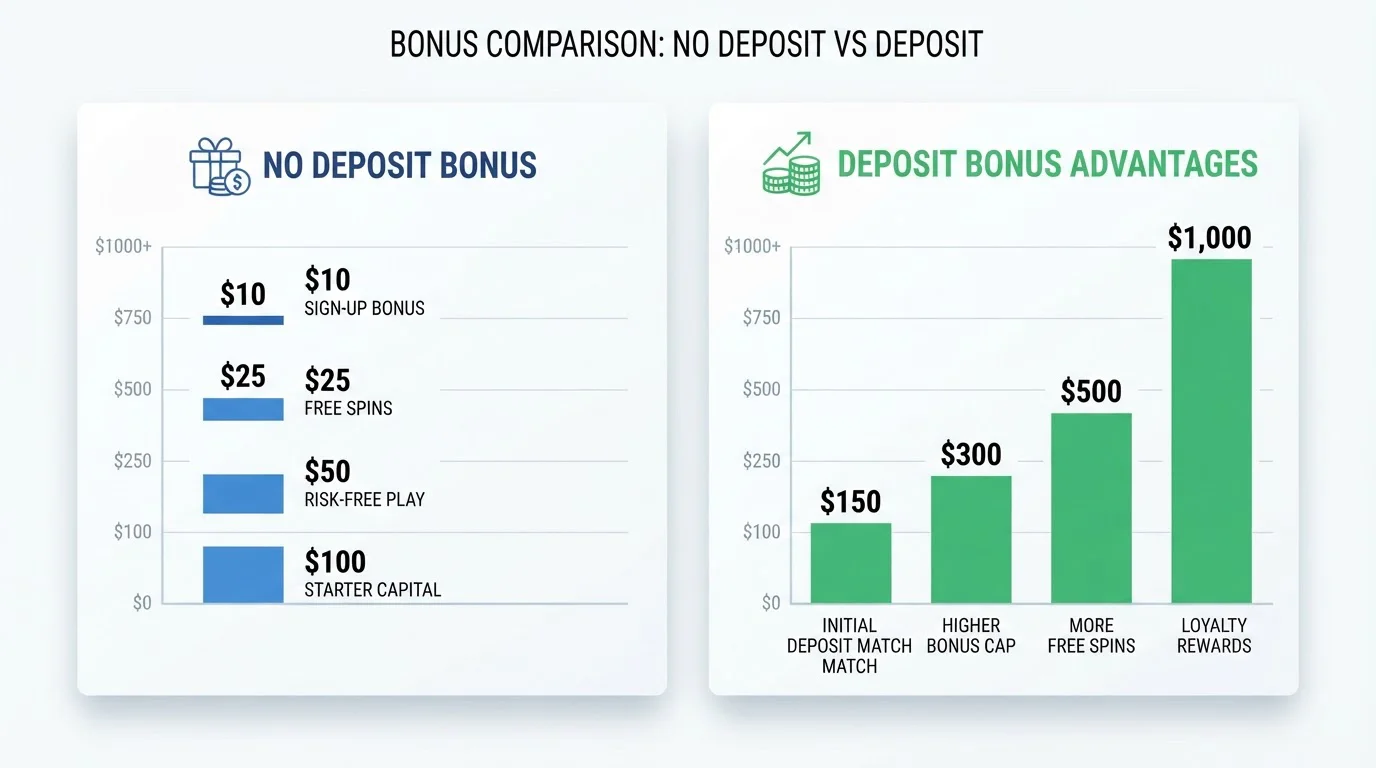
As a route to money, no. The arithmetic settles it: sixty times playthrough on a $10 chip demands $600 of turnover, the house edge across that turnover is expected to take three times your starting balance, and a $100 cap truncates the rare win that survives the grind. Operators hand these out to strangers precisely because the expected cost of doing so is small. Anyone selling a free chip as a bankroll is selling you the headline and hiding the clause.
As reconnaissance, yes, and without reservation. Twenty minutes with a free chip tells you how a cashier is laid out, whether support answers, how the games run on your phone, and whether the operator’s terms are written to be understood or written to be survived. That is genuinely useful information and you paid nothing for it. Claim it, spend it, learn what you can, and expect nothing on the way out.
If the real plan is to play with your own money, the deposit-triggered offers are not merely better, they are a different class of product. Ten dollars at NeoSpin becomes fifty dollars of playable balance with $2,000 of turnover attached, which is long entertainment and a hard exit. Ten dollars at LuckyDreams becomes twenty dollars plus a hundred spins with $350 of turnover, which is a genuine if modest shot at withdrawing something. Ten dollars at Ricky Casino is ten dollars, with a $30 withdrawal floor standing between you and any small win. Same deposit, three entirely different propositions, and the difference sits in clauses rather than in headlines.
The market-level caution stands behind all of it. Every operator named here is offshore, unregulated by Australian law, and beyond the reach of any local authority you could complain to. Verify a licence number on the issuing register rather than trusting a footer badge. Deposit what you are prepared to lose, because the protections you are accustomed to in regulated Australian financial products do not extend here. And treat the word “free” in this industry the way you would treat it on a used car lot: not a lie, exactly, but doing a great deal of work in a very small font.
No Deposit Bonus Casinos Australia 2026 — PayID Offers
Content created by the «Bankroll» team